- Home
- How to Write a Wedding Toast
How to Write a Wedding Toast That Feels Personal and Natural
A good wedding toast doesn't have to be clever, hilarious or perfectly polished. It needs to be genuine.
If you've been asked to give a toast, you may be wondering how to turn everything you know and feel about the couple into a few meaningful minutes. Where do you begin? What story should you tell? How personal should you get? And perhaps most importantly, how do you finish without rambling?
The good news is that writing a memorable wedding toast becomes easier when you stop trying to write a speech and start thinking about what you genuinely want to say to two people you care about.
You don't need to entertain the room. You don't need to tell the funniest story you've ever heard. And you certainly don't need to sound like anyone else.
You simply need a beginning, a meaningful thought or story, something you want to say about the couple, and a heartfelt ending.
Let's put those pieces together.
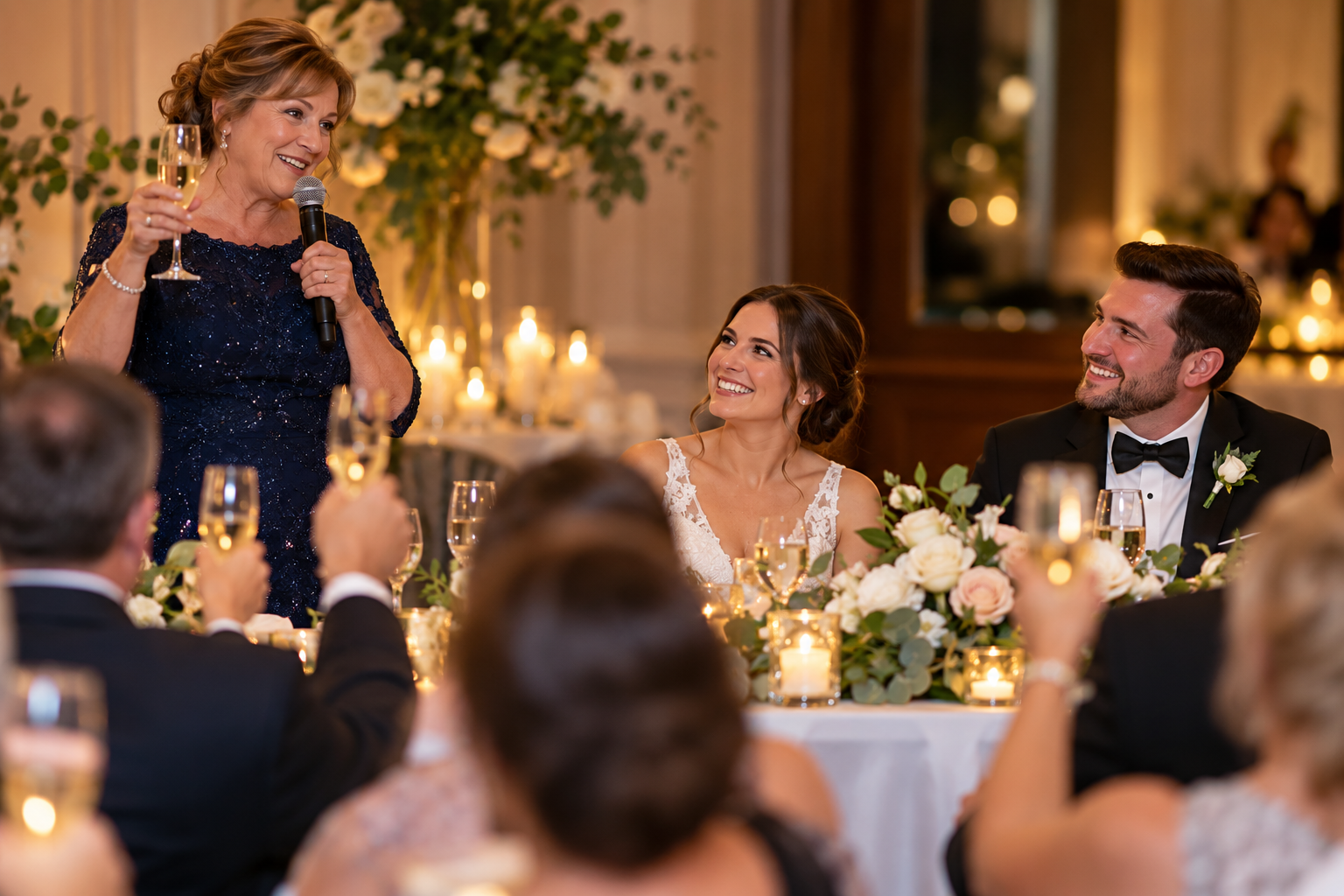
Start With What You Want the Couple to Remember
Before you start writing sentences, ask yourself a different question:
If the couple remembered only one thing from my toast five years from now, what would I want it to be?
Perhaps you want them to know how happy you are that they found each other. Maybe you have watched one of them grow from childhood into the person standing before you today. Perhaps you've seen how their relationship has changed both of them. Or maybe there is one quality in their relationship that you especially admire.
Start there.
Too many wedding toasts are written backward. The speaker starts looking for jokes, quotations or impressive opening lines before deciding what they actually want to say.
Find the heart of your toast first. The words become much easier after that.
If you'd like to step back and explore the bigger picture—including who gives a toast, when to give it and different kinds of wedding toasts—start with our complete guide to wedding toasts.
A Simple 5-Part Structure for a Wedding Toast
Once you know what you want the couple to remember, you can begin shaping your toast.
You don't need a complicated formula. Most good wedding toasts can be built around five simple parts.
1. Introduce Yourself
Not everyone in the room will know who you are. Begin by briefly introducing yourself and explaining your relationship to the couple.
Keep this short. Your guests don't need your biography—they just need enough information to understand why you are the person standing there with a microphone.
2. Say Something Personal
Now tell us something about the person—or people—you know.
This might be a quality you've always admired, something you've watched develop over the years, or a brief observation that helps everyone in the room see the couple through your eyes.
Specific is almost always better than general. Saying, “Sarah has always been generous” is nice. Remembering the time she drove three hours to help you when you needed her tells us what her generosity actually looks like.
3. Tell One Good Story
You don't need to tell the couple's entire history. One well-chosen story is usually more powerful than five shorter ones.
Choose a story that reveals something about the person or the relationship—not simply one that gets a laugh.
Humor can be wonderful, but the best wedding stories usually leave us knowing something about the couple that we didn't know before.
4. Bring the Story Back to the Couple
This is the part that can turn an entertaining story into a meaningful wedding toast.
Ask yourself: Why am I telling this story today?
Perhaps it shows the kindness you've always seen in the groom. Maybe it captures the bride's determination or sense of humor. Perhaps it was the moment you realized these two people really belonged together.
Make the connection for your listeners. Don't make them figure it out for themselves.
5. End With a Wish—and the Toast
Finish by looking forward rather than backward.
Offer the couple a hope, blessing or wish for their marriage. It doesn't need to be profound. In fact, simple words sincerely spoken are often the ones people remember.
Then invite everyone to raise a glass.
“To a lifetime of laughter, friendship and love. To Emma and Michael.”
That's enough. You don't need another story after the toast. When you've reached the ending, end.
Your Wedding Toast at a Glance
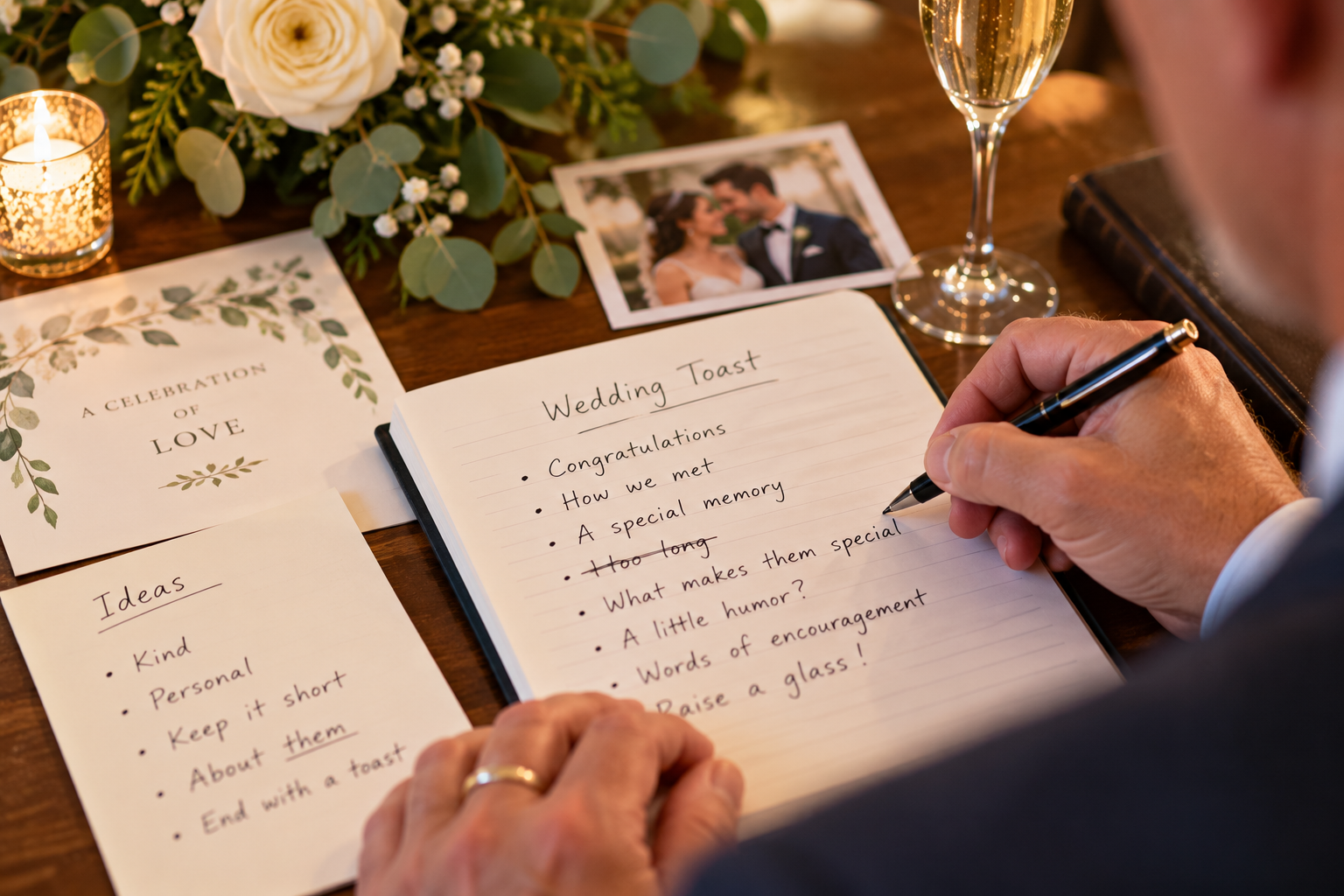
Introduce yourself → Say something personal → Tell one story → Connect it to the couple → Offer a wish and raise your glass.
How to Choose the Right Story
A personal story can be the most memorable part of a wedding toast—but only if it is the right story.
Look for a moment that tells us something about the person you know or about the couple's relationship. It doesn't have to be dramatic. Sometimes a small moment reveals far more than a big one.
Perhaps you remember when your friend first talked about the person they would eventually marry. Maybe you noticed how differently your son or daughter spoke about this relationship. Perhaps you watched one partner quietly care for the other during a difficult time. Or you may have a funny story that perfectly captures someone's personality.
Before including a story, ask yourself three questions:
Does it reveal something worth knowing?
A good story has a reason for being there. It helps us understand something about the couple, their relationship or the person you are honoring.
Will the couple enjoy hearing it told in this room?
A wedding reception isn't the place to surprise someone with a story they hoped would never be repeated. If you're uncertain whether the bride or groom would be comfortable hearing it in front of grandparents, coworkers and new in-laws, choose another story.
Can everyone understand why it's funny or meaningful?
Inside jokes can leave most of the room wondering what they missed. Give guests enough context to appreciate the story even if they weren't there when it happened.
Laugh With Them, Not at Them
Humor belongs in many wonderful wedding toasts. Embarrassment doesn't have to.
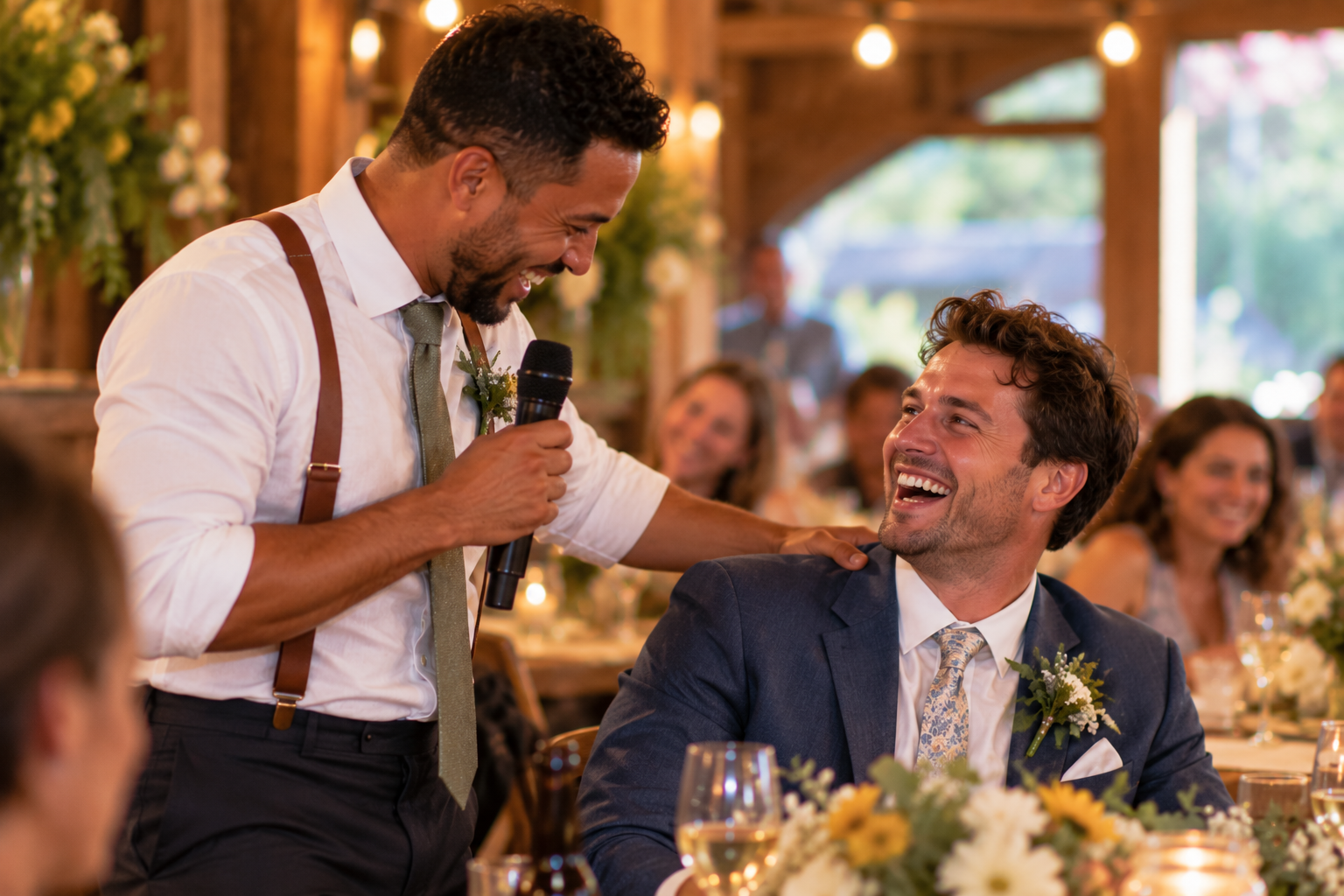
There is an important difference between telling a story that lets everyone laugh with someone and telling one that invites the room to laugh at them.
Stories about former relationships, sexual experiences, drunken escapades, family conflicts or genuinely embarrassing moments are usually better left for another occasion. The same is true of jokes that make one partner the target.
You know your relationship with the couple better than anyone else does, but remember that you're speaking to more than your closest group of friends. You're speaking to a room filled with people who have come together to celebrate them.
One Good Story Is Enough
Don't feel that you need to prove how long you've known someone by telling every great story you can remember.
Choose one.
Tell it well. Keep the details that matter and remove the ones that don't. Then connect the story to why you're telling it on this particular day.
A simple transition might be:
“I've always remembered that day because it says something about the person Sarah is. And when I saw that same kindness in the way she loves Daniel, I understood why the two of them work so well together.”
Now the story isn't merely a memory. It has become part of the toast.
Write the Way You Actually Speak
A wedding toast is meant to be heard, not read.
That's an important distinction. When we sit down to write something, we often become more formal than we would ever be in conversation. Sentences get longer. Words become more impressive. Before long, the toast may look beautiful on the page but sound nothing like the person giving it.
Write your first draft as though the couple were sitting across the table from you.
What would you actually say to them?
Instead of:
“It has been my great privilege to witness the remarkable relationship that has developed between the two of you.”
You might simply say:
“I've loved watching the two of you build a life together.”
Both express a similar thought. The second sounds like something a person might actually say.
Read It Out Loud
Once you have a draft, read the entire toast aloud.
You'll hear things you won't notice while reading silently. A sentence may be too long. A transition may feel awkward. A joke that looked funny on the screen may not sound funny when spoken.
If you stumble over a sentence every time you read it, don't practice the sentence harder. Rewrite the sentence.
Reading aloud also helps you discover whether the toast sounds like you. If you find yourself thinking, I would never say that, change it to something you would say.
Don't Try to Sound Profound
Weddings can make us feel that every sentence needs to be important. It doesn't.
You don't need an elaborate quotation or a grand statement about the meaning of love. If you have something simple and genuine to say, say it simply.
“I've never seen my brother happier.”
“You bring out something wonderful in each other.”
“I'm grateful that our family gets to welcome you into it.”
Those aren't complicated thoughts. Spoken sincerely, they can be powerful ones.
Let Some of Your Personality Stay in It
Your toast shouldn't sound as though it could have been delivered by anyone in the room.
If you're naturally funny, let some humor in. If you're sentimental, it's all right to be sentimental. If you're usually a person of few words, you don't suddenly need to become a five-minute storyteller.
The goal isn't to give the perfect wedding toast.
It's to give a toast that sounds like you.
How Long Should a Wedding Toast Be?
A wedding toast doesn't need to be long to be meaningful. In fact, one of the most common mistakes is trying to say too much.
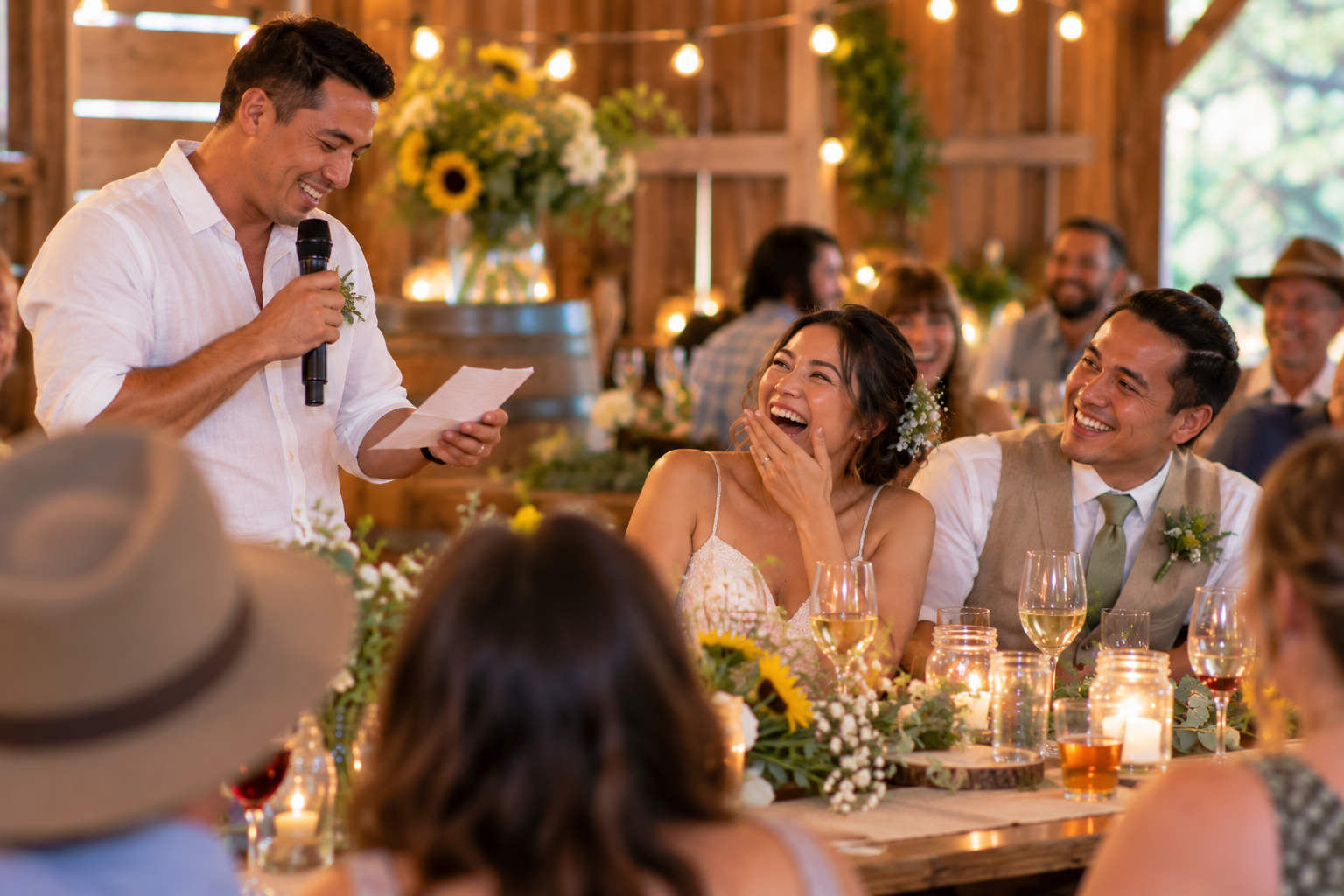
For most wedding toasts, three to five minutes is plenty. That's enough time to introduce yourself, share a meaningful thought or story, say something about the couple and offer your good wishes.
A shorter toast can be wonderful, too. If you can say what you genuinely want to say in two minutes, don't stretch it to five.
Remember that you may not be the only person speaking. Several wonderful five-minute toasts can quickly become a lengthy interruption in the celebration.
As you edit your toast, don't ask, “Is this story good?” Ask, “Does this story need to be part of this toast?”
Those are two very different questions.
Leave them wishing you had said a little more rather than wondering when you're going to stop.
What Not to Say in a Wedding Toast
Knowing what to leave out can be just as important as knowing what to include.
A wedding toast is personal, but it is also public. You're speaking in front of family members, friends, coworkers and people you may never have met before. Something that is hilarious among a few close friends may feel very different when told into a microphone at a wedding reception.
Before including anything that might embarrass the couple, ask yourself a simple question:
Am I telling this because it honors them—or because it gets me a laugh?
That question can eliminate a surprising number of questionable stories.
Former Relationships
References to former boyfriends, girlfriends, spouses, or romantic adventures usually don't add anything worthwhile to a wedding toast. This is a day for celebrating the relationship that brought the couple to this moment—not revisiting relationships that didn't.
But there are exceptions, particularly when you know the person well enough to know exactly how a bit of gentle teasing will be received.
I once gave a toast to a bride I had known since her teenage years. Back then, there was a young man I'll call Jerry—a thoroughly down-home country boy who didn't fit her image at all of the kind of man she imagined herself marrying. Poor Jerry pursued her fruitlessly.
Years later, she married Paul, the love of her life and very much the man she had dreamed of finding.
During my toast I looked at the newlyweds and said something like, “And we all wish you and Jerry countless years of happiness together.... Oh no! I meant you and Paul.”
The bride looked shocked for an instant—and then roared with laughter. So did the people who had known her during those earlier years.
Why did it work?
Because I knew the bride. She knew I was teasing her affectionately. Jerry wasn't a painful former relationship. And the joke was rooted in a harmless story from long ago rather than something that could embarrass or hurt anyone.
That's the test. Don't simply ask whether a story is funny. Ask whether this particular couple, in this particular room, will enjoy hearing you tell it.
If you're not sure, choose another story.
Stories That Aren't Yours to Tell
You may know something funny, surprising or deeply personal about one of the newlyweds. That doesn't necessarily mean it belongs in your toast.
Some stories are yours to share. Others were entrusted to you.
If you're unsure which kind of story you have, leave it out.
Jokes at Someone Else's Expense
Gentle teasing can work beautifully when it comes from affection and everyone—including the person being teased—can enjoy it.
But be careful with jokes about appearance, intelligence, money, family members, previous mistakes or anything you know is a sensitive subject.
A wedding toast isn't a roast.
The couple should feel better about themselves after your toast, not relieved that it's over.
Too Many Inside Jokes
One inside joke may give your toast personality. A string of them can make most of the room feel as though they're listening to a private conversation.
If a story needs five minutes of explanation before anyone understands why it's funny, it's probably not the right story for the toast.
A Little Courage in a Glass?
A little wine before your toast may help take the edge off your nervousness. But be careful. One glass that helps you relax can easily become two or three glasses that make giving the toast much more difficult.
Alcohol can cause you to stumble over words, slur your speech, forget what you planned to say or lose your place entirely. It can also allow that little voice in your head to whisper, “Now would be the perfect time to say what you're really thinking."
It probably isn't.
And here's the unfortunate part: you may have written an outstanding wedding toast, but if you've had too much to drink, that's probably not what people will remember.
They'll remember the person who couldn't quite get through it.
You've put time and thought into what you want to say. Give yourself the best chance to say it well. Save most of the celebrating until after you've given the toast.
Don't Turn the Toast Into Your Story
We've probably all been in conversations with someone who somehow manages to turn everything back to themselves.
You tell a story and it reminds them of their story. You mention a trip and they tell you about their trip. They may even begin by asking you a question, but before long the conversation has found its way back to them.
Most of us don't do this intentionally. It's natural to connect what someone else is saying with our own experiences, memories and stories. But when you're writing a wedding toast, be especially careful of that tendency.
I once knew a woman who was almost the complete opposite. During the two years I knew her, I can't remember her ever turning a conversation toward herself. She was genuinely interested in you. Somehow, regardless of where a conversation began, her attention remained on the person she was talking with.
And something remarkable happened: people were drawn to her.
She didn't become less interesting by talking less about herself. Quite the opposite. People loved being around her because when you were with her, you felt that she was genuinely interested in you.
There's a lesson there for anyone writing a wedding toast.
Your experiences and memories belong in the toast. After all, they're part of what gives you something personal to say. But use them to help everyone see the couple, not to help the room see you.
Before keeping a story, ask yourself:
“Am I telling this because it reveals something meaningful about the couple—or because it's a story I enjoy telling?”
Sometimes the answer will tell you exactly what to cut.
This is their wedding. For these few minutes, give them the wonderful gift of allowing the story to be entirely about them.
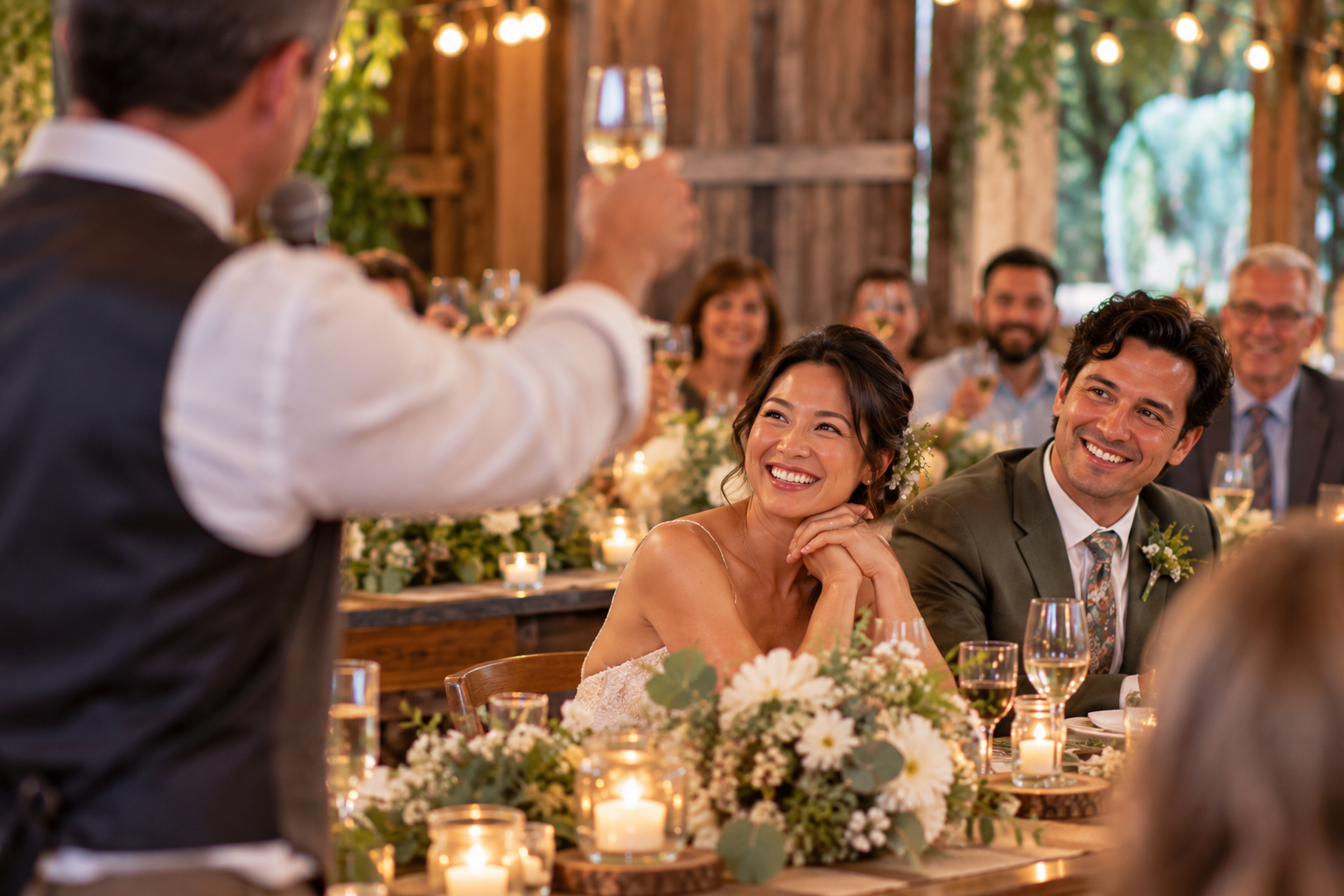
Looking for more help with your wedding toast?
Visit our Wedding Toasts guide for advice on timing, who gives the toasts, what makes a toast memorable and more.