
How to Organize Wedding Invitations and Track RSVPs
Your wedding invitations are where your guest list becomes real—and knowing how to organize wedding invitations properly is what keeps your planning clear and stress-free.
Learning how to organize wedding invitations and track RSVPs properly can save you hours of stress, prevent guest list mistakes, and help you stay on budget from the very beginning.
Every name you’ve chosen now turns into a decision—who receives an invitation, who gets a plus-one, and how your final guest count begins to take shape.
If you haven’t finalized your guest list yet, start with our step-by-step guide on how to create a wedding guest list without stress or overspending. Organizing your wedding invitation list early helps you avoid confusion later and keeps your planning on track.
Once your list is set, your focus moves to organizing your wedding invitations. This is where your planning becomes practical, turning names into invitations, timelines, and confirmed guests. At this stage, you'll confirm addresses, decide on plus-ones, choose your invitation style, and prepare to track RSVPs efficiently.

Planning your wedding guest list together helps shape every invitation decision that follows.
The Connection Between Your Guest List and Invitations

Your guest list and your invitations are not separate tasks—they work together as one system.
The decisions you make when creating your guest list directly shape your invitations. Who you invite, how you group guests, and whether you allow plus-ones will all determine how many invitations you need and how they are addressed.
Before you order or send invitations, make sure you’ve completed a few key steps:
- Finalize who is included on your guest list
- Confirm your plus-one and household rules
- Collect accurate mailing addresses
Taking care of these details early helps you avoid duplicate invitations, missed guests, and costly reprints.
How Your Guest List Shapes Your Invitations

Your guest list decisions directly influence your invitation wording, guest count, and overall wedding experience.
Your guest list doesn’t just guide your invitations—it determines how your entire wedding comes together.
Every decision you make at this stage affects both your invitations and your final guest count. How you group guests, assign plus-ones, and address invitations will all influence how many people you ultimately host.
Your guest list determines:
- How many invitations you need (households vs. individuals)
- How each invitation is addressed (for example, “The Smith Family” vs. “Ms. Jane Smith”)
- Who receives a plus-one
- How your guest count will change as RSVPs come in
How Invitations Impact Your Final Numbers

Sending your invitations is the moment your planning becomes real.
Once invitations are mailed, your guest list shifts from a draft to a working set of numbers that will guide your next decisions—catering totals, seating arrangements, rentals, and final venue requirements.
For example, if you send invitations to 180 guests and expect a 10–20% decline rate, you can anticipate roughly 145–160 attendees. This gives you a practical range to plan around before final RSVPs are confirmed.
To stay on track, make sure you know your vendor deadlines for final headcounts when you send your invitations. This ensures you can adjust confidently as responses come in.
This is where having a structured wedding guest list planner makes it much easier to track changes and stay accurate as your numbers evolve.
Keeping Everything Organized
As invitations are sent, your guest list becomes your central planning tool.
It should track:
- RSVPs and attendance status
- Plus-ones and total guest count
- Meal selections and special requests
- Notes for seating, catering, and follow-ups
Think of your guest list as a living document—a single source of truth that keeps your planning accurate and up to date.
Using a simple spreadsheet or a structured guest list planner can help automate counts, reduce manual errors, and keep everything organized as your wedding date approaches.
Keeping your wedding guest list, invitations, and RSVPs organized in one place makes the entire process easier and far less stressful.

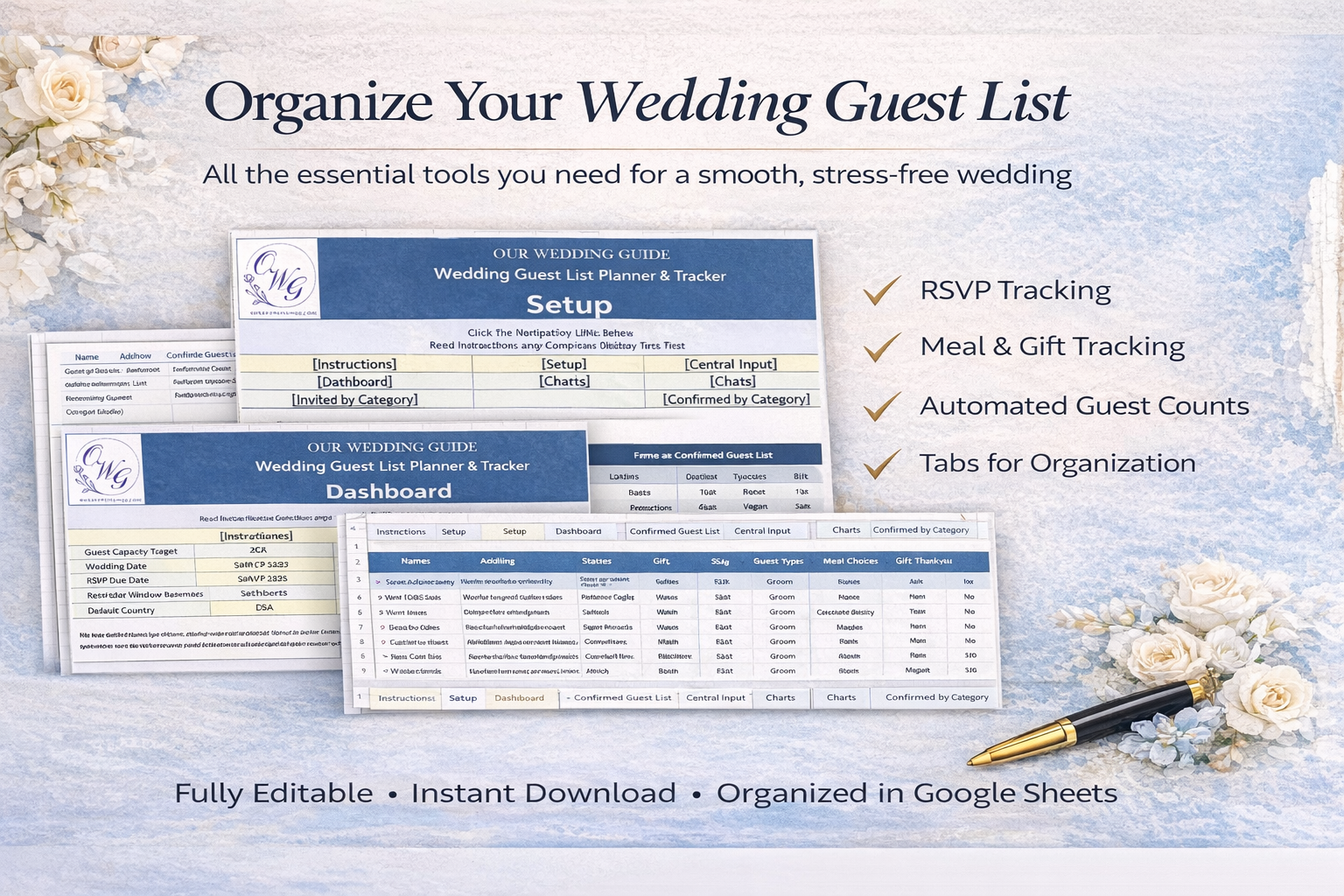
Stay organized and track every RSVP, guest detail, and final count in one place.
How to Organize Your Wedding Invitations Timeline Correctly
Planning your invitation timeline early keeps your entire wedding on track.
Most couples follow a simple timeline:
- Finalize your guest list 9–12 months before the wedding (this drives your budget and venue decisions)
- Select your invitations about 4 months before the wedding
- Send invitations 2–3 months in advance
This timeline gives your guests enough notice to plan and respond, while allowing you to stay organized as your wedding date approaches.
When to Send Wedding Invitations
Timing your invitations affects more than just delivery—it impacts RSVP response rates, vendor deadlines, and your ability to finalize your guest list with confidence.
For most weddings:
- Select invitations: at least 4 months before the wedding
- Send invitations: 2–3 months before the wedding
To stay on schedule, set your RSVP deadline 2–4 weeks before your vendor final count is due, giving you time to follow up with any guests who haven’t responded.
Example timeline:
If your wedding date is July 1:
- Finalize your guest list: December–January
- Order invitations: by March 1
- Send invitations: by April 1
- RSVP deadline: mid-May
This gives you time to confirm final numbers with your venue and caterer without last-minute stress.
Special situations:
For destination weddings or when many guests are traveling:
- Send save-the-dates 6–8 months in advance
- Send invitations 4–6 months before the wedding
This allows guests to arrange travel and accommodations well in advance.
Using a simple guest list tracker helps you manage deadlines, RSVPs, and final counts without confusion as your timeline progresses.
Save the Dates vs Invitations
Save-the-dates are optional—but in some situations, they make a big difference.
Think of them as an early heads-up rather than a formal invitation. They help guests reserve your date before invitations are sent, especially when planning ahead is important.
Save-the-dates are most helpful if:
- Many of your guests will need to travel
- Your wedding falls during a busy season or holiday period
- You are planning a destination wedding
As a general guideline, consider sending save-the-dates if more than 20–25% of your guest list will be traveling.
Timing guidelines:
- Send save-the-dates 6–8 months before the wedding
- Send invitations 4–6 months before for destination weddings
- For local weddings, invitations sent 2–3 months in advance are usually sufficient
If you’re unsure, a simple way to decide is to check with a few key guests—such as close family or out-of-town friends. If travel planning will be a challenge, sending save-the-dates can help ensure better attendance and fewer scheduling conflicts.
Including save-the-dates in your timeline can also make it easier to manage your guest list and RSVPs as your plans develop.
Designing Your Wedding Invitations
How Your Invitations Set Guest Expectations

Your wedding invitation does more than share details—it sets the tone for your entire celebration.
From the wording and design to the level of formality, your invitation gives guests their first impression of what to expect. A formal, black-tie wedding calls for elegant language and classic design, while a casual or rustic celebration can use more relaxed wording and creative styles.
Your invitations also help guests prepare. Elements like dress code, venue type, and timing subtly communicate how they should plan for the day—whether that means formal attire, outdoor footwear, or travel arrangements.
Choosing a style that reflects your wedding
As you design your invitations, aim for consistency between your invitation and your overall wedding theme. This creates a cohesive experience from the moment your guests receive their invitation to the day of your event.
If you’re creating your own invitations, be mindful of copyright for images, fonts, and wording. Using royalty-free resources or professionally designed templates allows you to personalize your invitations without running into legal issues.
Keeping your invitation style aligned with your guest list and wedding plans helps create a smoother experience from invitation to RSVP.

What to Include in Your Wedding Invitations
Your wedding invitation should give guests everything they need to decide if they can attend—and how to prepare.
Clear, well-organized information helps guests respond quickly and reduces confusion as you begin tracking RSVPs.
Who is hosting the wedding
The host line sets the tone and determines how your invitation is worded. Common options include:
- The bride’s parents
- Both families together
- The couple themselves
- A combination of the couple and their parents
For example:
Jordan and Chris, together with their parents, invite you to celebrate…
Essential details every invitation should include
Make sure every invitation clearly includes:
- Who is getting married (full names)
- Ceremony date and start time (include AM/PM and time zone if needed)
- Ceremony location with full address
- Reception details (if different from the ceremony)
- RSVP instructions with a clear deadline
- RSVP method (reply card or digital RSVP link)
These are the core details guests need to make a decision and respond.
Optional details to include or move to your wedding website
To keep your invitation clean and easy to read, consider placing additional information on your wedding website:
- Dress code (e.g., black tie, cocktail attire, casual)
- Travel and accommodation details
- Registry information
- Notes about children or adults-only policies
Including a wedding website allows you to share more information without overcrowding your invitation.
Simple wording examples
Use wording that matches the tone of your wedding:
Formal: The honor of your presence is requested at the marriage of [Full Name] and [Full Name] on [Date] at [Time] at [Venue Name], [Full Address]. Reception to follow. Please RSVP by [Date].
Casual: Please join [Name] and [Name] for a celebration of their marriage on [Date] at [Time] at [Venue]. Dinner and dancing to follow. RSVP by [Date].
Practical tip for better RSVP tracking
Make your RSVP process as simple as possible.
Include your RSVP deadline on both the invitation and your wedding website, and clearly explain how guests should respond. If you’re mailing invitations, include a reply card with a stamped envelope. For digital invitations, provide a clean and easy-to-use RSVP link.
This small step can significantly improve response rates and make managing your guest list much easier.
Adults-Only Weddings (How to Communicate it Clearly)
If you’ve decided on an adults-only wedding, communicate it clearly and kindly on your invitation. Setting expectations upfront helps avoid confusion and prevents awkward situations later.
An adults-only celebration is a reasonable choice when your venue has limited capacity, your budget requires tighter numbers, or you want a more formal or evening-focused atmosphere. The key is to decide early and apply the rule consistently across your guest list.
How to word an adults-only invitation
Use polite, direct language so guests understand your expectations without feeling excluded.
Examples you can include on your invitation or details card:
- “We respectfully request an adults-only celebration.”
- “We have reserved seats for you and your guest.”
Clear wording helps guests plan accordingly and reduces follow-up questions.
Handling sensitive conversations
Even with clear wording, some guests may have questions—especially close friends or family members.
When this happens, it’s best to respond directly and respectfully. A brief, honest explanation is usually well received.
Here are a few simple ways to handle these conversations:A practical approach
-
Close friend:
“We’d love to celebrate with you. Because of our venue and guest list limits, this will be an adults-only event. We hope you can still join us.” -
Family member:
“We wish we could include everyone, but our guest list and venue size mean we had to limit numbers. We truly hope you understand.” -
Coworker or acquaintance:
“Due to space and budget constraints, we’re keeping our celebration limited to invited guests. We appreciate your understanding.”
A practical approach
If someone asks why they weren’t invited or why children aren’t included, keep your explanation simple and consistent. Refer to your guest list guidelines—such as venue capacity or budget—and avoid over-explaining.
If appropriate, offer an alternative way to connect, such as meeting after the wedding or celebrating separately. This helps maintain relationships while keeping your plans intact.
Clear communication at this stage also makes it easier to manage RSVPs and avoid confusion as responses come in.
Handling Sensitive Guest List Conversations
If there are people you care about who aren’t on your guest list, it’s best to speak with them directly rather than let them find out through the absence of an invitation.
A simple, honest conversation goes a long way. Let them know your guest list is limited and that the decision wasn’t easy. Most people will understand when it’s handled with clarity and respect.
Paper vs Electronic Wedding Invitations
 Digital planning tools help you manage your guest list quickly and efficiently. |
 Traditional invitations create a formal, tangible experience for your guests. |
Choosing between paper and electronic wedding invitations affects your budget, timeline, and how you manage your guest list and RSVPs.
Both options work well—the right choice depends on your priorities, your guests, and how you want to organize your planning process.
Cost and budget considerations
Printed invitations can vary widely in cost depending on design, paper quality, and printing choices. When you include envelopes, RSVP cards, postage, and additional items like save-the-dates or thank-you notes, costs can add up quickly.
For example, for a wedding with around 150 guests (approximately 70–80 households), printed invitations can cost several hundred to several thousand dollars.
Electronic invitations, on the other hand, are often free or involve a modest platform fee. They eliminate printing, postage, and assembly costs—freeing up budget for other priorities like your venue or catering.
Time and convenience
Paper invitations require more preparation time. You’ll need to order them in advance, address envelopes, assemble materials, and mail everything before your RSVP deadline.
Electronic invitations can be sent instantly, making them a faster and more flexible option. They also make it easier to send reminders or adjust your guest list if needed.
Managing your guest list and RSVPs
Your choice of invitation format directly affects how you track responses.
- Paper invitations often require a structured system to track mailed invites, returned RSVP cards, plus-ones, and follow-ups
- Electronic invitations typically collect responses automatically and can export data to a spreadsheet or event tool
If you want faster tracking and fewer manual updates, electronic invitations can simplify the process significantly.
Choosing the right option for your wedding
Consider these factors when deciding: Final thought
- Style: Does a physical invitation match the tone of your wedding?
- Budget: How much do you want to spend on stationery?
- Guest preferences: Will your guests respond more reliably to paper or digital invites?
- RSVP method: Do you prefer reply cards or digital tracking?
- Logistics: Do you need tight control over guest count or multiple invitation rounds?
Both paper and electronic invitations achieve the same goal—inviting your guests to celebrate with you.
Paper invitations offer a traditional, tangible experience, while electronic invitations provide speed, flexibility, and easier tracking.
Choosing the right format comes down to how you want to balance style, cost, and the way you manage your guest list throughout the process.
No matter which option you choose, having a clear system to track your guest list and RSVPs will make the entire process much easier.
Proofreading Your Invitations
Before you print or send your wedding invitations, review every detail carefully. Once invitations are mailed or delivered, even small mistakes can be expensive, time-consuming, and stressful to fix.
Proofreading is not just about grammar. It is also about checking names, dates, locations, RSVP instructions, and guest-list details so everything matches your final plans.
Ask at least one other person to proofread your invitation with fresh eyes. A parent, sibling, or trusted friend may catch errors you have overlooked after reading the same wording multiple times.
Invitation Proofing Checklist
Before sending your invitations, confirm:
-
Guest names — spelling, honorifics, and household formatting
(for example: “The Smith Family” vs. “Ms. Jane Smith”) - Date and time — including AM/PM and time zone if guests are traveling
- Venue details — full address, correct location name, and any helpful entrance or parking notes
- RSVP instructions — RSVP card wording, digital RSVP link, postage, and response deadline
- Guest-list rules — plus-one permissions, adults-only wording, and any other details that should match your master guest list
Even a small error can create unnecessary work. A misspelled name on a large batch of printed invitations may require reprints, delays, or awkward follow-up messages.
Practical Tips Before You Send
To reduce mistakes:
- Lock your guest list before sending addresses to the printer
- Double-check that your RSVP deadline gives you enough time to follow up before vendor final counts are due
- Verify postage if your invitation includes RSVP cards, inserts, or heavier paper stock
- Have one final proofreader review names and addresses before anything is mailed
Taking extra time to proofread now can save money, prevent confusion, and make the rest of your invitation process run much more smoothly.
Tracking RSVPs and Managing Your Guest List
Tracking RSVPs is where your guest list becomes a confirmed guest count.
As responses come in, you need a clear system to keep everything organized—so you always know who is attending, how many guests to expect, and what details your vendors will require.
Without a structured approach, it’s easy to lose track of responses, miss important details, or end up with inaccurate numbers.
What You Need to Track
As RSVPs arrive, make sure you are consistently tracking:
- Who has responded (and who hasn’t)
- Number of guests attending (including plus-ones)
- Meal selections or dietary requirements
- Contact details for follow-up
- Notes for seating, special requests, or changes
Keeping everything in one place ensures your guest list stays accurate and up to date.

Setting Your RSVP Timeline
A clear timeline helps you stay in control:
- Set your RSVP deadline 3–4 weeks before your wedding
- Include the deadline on both your invitation and wedding website
- Plan time to follow up with guests who haven’t responded
This gives you enough time to finalize numbers for catering, seating, and venue requirements.
Understanding Your Final Guest Count
Not every invited guest will attend.
Most weddings experience a 10–20% decline rate, depending on travel, timing, and other factors. Your plus-one policy can also significantly increase your final numbers.
These changes directly affect:
- Your catering costs
- Your seating plan
- Your venue capacity
For example, if you invite 200 guests and expect a 15% decline, you can estimate around 170 attendees before final confirmations.
Keeping Everything Organized
The key to managing RSVPs successfully is having a single, reliable system where all responses are tracked and updated.
As changes happen—late replies, cancellations, or adjustments—update your records immediately so your guest count remains accurate.
Using a structured wedding guest list planner allows you to track responses, manage details, and stay organized without relying on multiple lists or manual updates.
Final Guest List Steps and Followup
Final Adjustments
Even after RSVPs are returned, expect changes. Some guests will cancel, while others may request late additions.
Your guest list should remain flexible until you provide your vendors with a firm final count.
What to expect after your RSVP deadline
As responses are finalized:
- Some guests may cancel unexpectedly
- Others may ask to add a guest or plus-one
- A small number may respond late
Having a plan for these situations helps you stay in control without disrupting your overall numbers.
How to manage last-minute changes
- Keep a short waitlist of guests you would invite if space becomes available
- Set a clear policy for late additions, typically tied to cancellations
-
Update your guest list immediately as changes occur
Confirming your final numbers
Once your RSVP deadline has passed:
- Finalize your guest count
- Confirm numbers with your venue and caterer
- Complete your seating plan
Most venues require final numbers 1–2 weeks before the wedding, so it’s important to stay on schedule.
Practical timing tip
Set your RSVP deadline 3–4 weeks before your wedding. This gives you time to:
- Follow up with guests who haven’t responded
- Reconcile all responses
- Make adjustments to your guest list
- Provide accurate final counts to your vendors
Some couples also include a small buffer when confirming numbers to account for last-minute changes.
Keeping your guest list updated in one place makes these final adjustments much easier and helps ensure your numbers stay accurate.
How to Track Your Wedding Gifts and Thank You Notes

Your guest list doesn’t end with your invitations—it continues through your entire wedding experience.
As gifts arrive and your celebration concludes, keeping track of what you received and who sent it helps ensure your thank-you notes are timely, personal, and accurate.What to track after your wedding
As gifts begin to arrive, record:
- Gift description
- Sender name
- Relationship (family, friend, colleague)
- Date received
- Thank-you note sent (Y/N) and date
Keeping this information organized helps ensure no one is overlooked and allows you to express genuine appreciation.Sending thoughtful thank-you notes
Sending thank-you notes promptly is an important part of wedding etiquette and helps maintain meaningful relationships with your guests.
A simple, heartfelt message is all that’s needed.
Example:
Dear [Name],
Thank you so much for the [gift]. We truly appreciate your thoughtfulness and can’t wait to use it as we start our life together. It meant so much to celebrate with you.
With love,
[Your Names]
Timing and practical tips
- Aim to send thank-you notes soon after receiving the gift
- Keep your messages personal, even if brief
- Use email or a thoughtful message if mailing isn’t practical for some guests
Having a clear system to track gifts and responses makes this process much easier and ensures your gratitude is expressed thoughtfully and on time.
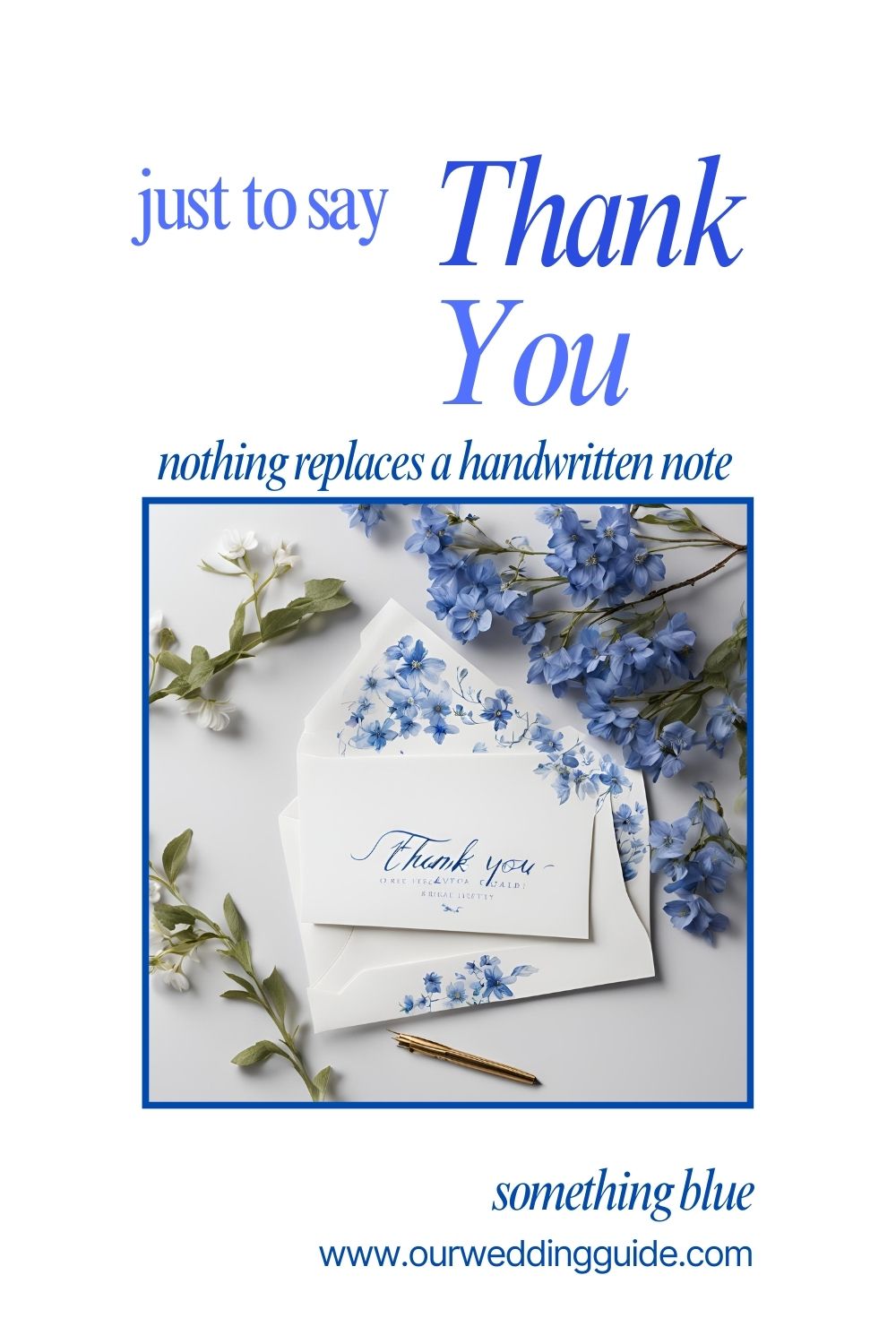
Do not wait until after the wedding to send Thank You notes.
Send a note of gratitude immediately upon receiving the gift. This is always appreciated by the gift giver as it indicates that you received the gift, and that you appreciated the gift giver's generosity. A prompt
Thank You note brings a sense of well-being to both the giver and receiver of the gift.
Common Wedding Invitation Mistakes to Avoid
Small mistakes with your wedding invitations and guest list can lead to unnecessary stress, added costs, and last-minute complications. Addressing these common issues early helps keep your planning smooth and on track.
Sending invitations too late
Order your invitations at least 4 months before your wedding so you can send them 2–3 months in advance.
Sending invitations too late reduces RSVP time and can create scheduling or travel challenges for your guests.
Missing key details on the invitation
Make sure your invitation clearly includes:
- Host line
- Full names
- Date and time
- Venue and full address
- RSVP method and deadline
- Dress code (if applicable)
Using a checklist and proofreading carefully helps avoid confusion and costly reprints.
Not tracking RSVPs properly
Without a clear system, it’s easy to lose track of responses, follow up multiple times, or miss important details.
Keep all responses in one place so your guest list stays accurate and up to date.
Adding guests after invitations are sent
Changing your guest list after invitations go out can create confusion and disrupt your planning.
Finalize your guest list before printing. If you need to make adjustments, follow a clear approach—such as inviting additional guests only if space becomes available due to cancellations.
Incorrect postage or addressing
Small mailing errors can cause delays and additional costs.
Before sending invitations:Handling sensitive situations
- Verify postage weight (especially with inserts or RSVP cards)
- Double-check names, titles, and addresses
-
Have a second person review everything
Handling sensitive situations
Questions about guest list decisions can arise, especially when expectations differ.
Keep your response simple and respectful. A brief explanation—such as venue capacity or budget limitations—is usually enough. Addressing these situations early helps avoid misunderstandings and preserves important relationships.
Avoiding these common mistakes makes it much easier to stay organized, keep your guest list accurate, and move confidently through the final stages of your wedding planning.
Conclusion
Your wedding invitations are more than a formality—they are a key part of your guest list strategy.
From timing and wording to RSVP tracking and final headcount, every step is connected. When your invitations and guest list work together, your planning becomes clearer, your decisions become easier, and your wedding day comes together exactly as you envisioned.
Every choice—from paper vs. electronic invitations to RSVP deadlines and tracking methods—affects your final guest count and the numbers you share with vendors. Aligning your invitations with how you manage your guest list helps reduce confusion and keeps everything running smoothly.
Quick action steps to stay on track
- Finalize addresses and confirm plus-one rules
- Choose your RSVP method and set a clear deadline
- Decide between paper and electronic invitations based on your style, budget, and tracking needs
Staying organized and planning ahead allows you to focus on what matters most—bringing your family and friends together to celebrate your marriage.
If you want to simplify the process, using a structured wedding guest list planner can help you track invitations, RSVPs, and final numbers in one place—so nothing is missed as your plans come together.