- Home
- Wedding Toasts
Wedding Toasts: How to Give a Meaningful Wedding Toast
Wedding toasts are among the most personal moments of a wedding celebration.
For a few minutes, someone who knows and cares about the couple has the opportunity to stand, raise a glass and say something that may be remembered long after the wedding day is over.
That can be a wonderful opportunity. It can also feel a little intimidating.
What should you say? How long should you speak? Should you try to be funny? Is it all right to use notes? Who traditionally gives a wedding toast, and when should the toasts take place?
The good news is that a meaningful wedding toast doesn't have to be clever, polished or perfect. It simply needs to be sincere.
Whether you are a parent, grandparent, sibling, best man, maid or person of honor, member of the wedding party, close friend—or someone who has unexpectedly been handed a microphone—this guide will help you prepare and deliver a toast that honors the couple and adds something meaningful to their celebration.
What Is a Wedding Toast?
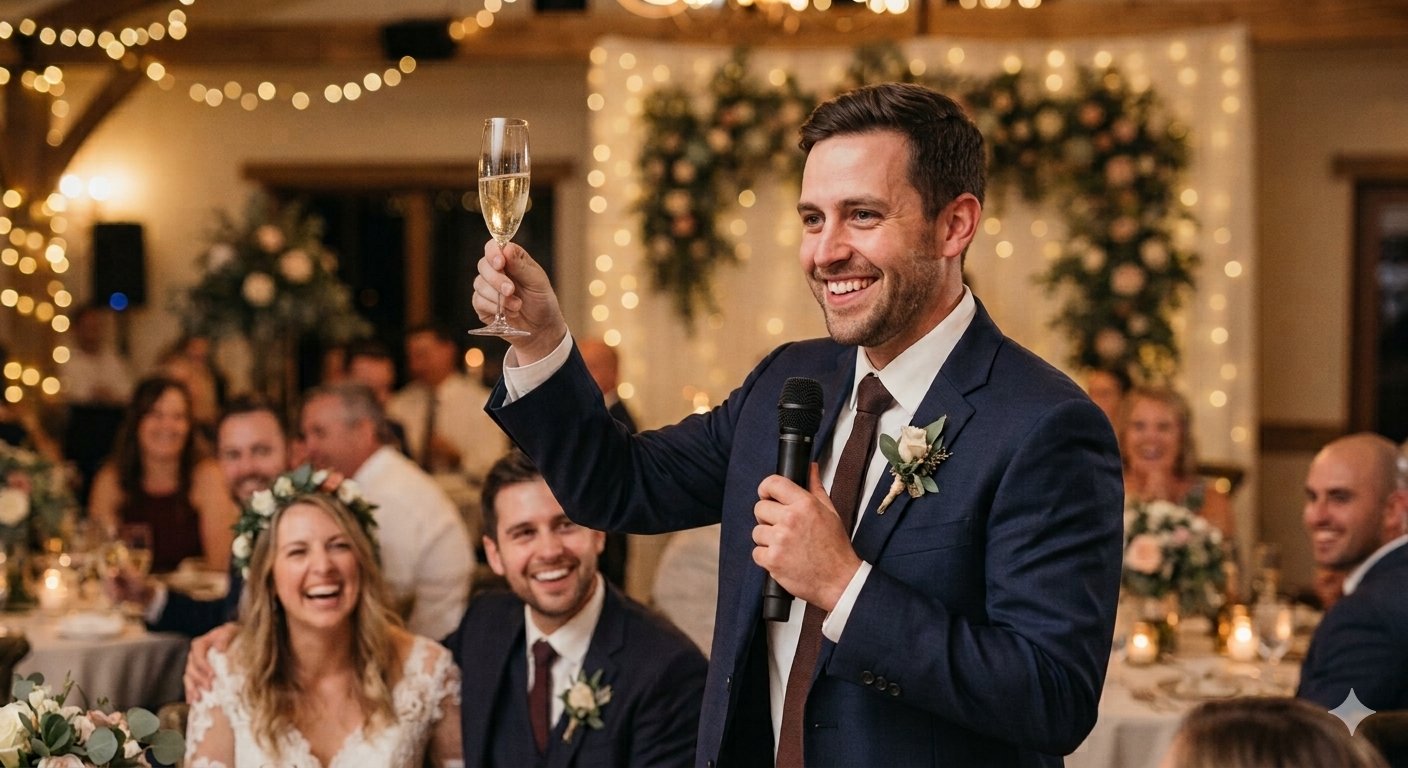
A wedding toast is a brief expression of good wishes offered in honor of the newly married couple.
Traditionally, the person giving the toast raises a glass and invites the other guests to join in wishing the couple happiness, love and a good life together.
But a toast is more than raising a glass.
At its best, it is a moment when someone who matters to the couple says, in front of the people gathered around them:
I know you. I care about you. I celebrate what you have found in each other, and I wish you well in the life you are beginning together.
That is why some of the most memorable wedding toasts aren't the funniest or most eloquent ones. They are the ones that sound genuine.
Wedding Toast or Wedding Speech: What's the Difference?
The words wedding toast and wedding speech are often used interchangeably, and there is nothing wrong with that.
Technically, however, there is a difference.
A wedding speech is the message itself—the stories, memories, observations and good wishes someone shares with the couple and their guests.
The toast is traditionally the conclusion: the moment when the speaker raises a glass and invites everyone to join in honoring the couple.
For example, someone might speak for three or four minutes about knowing one of the partners, share a brief story about the couple and then conclude:
“Please raise your glasses with me. To a lifetime of love, laughter and discovering just how wonderful life can be when you share it with your best friend.”
That's the toast.
Today, however, most people simply refer to the entire thing as a wedding toast. Don't worry too much about the terminology. Concentrate instead on what you want the couple to remember.
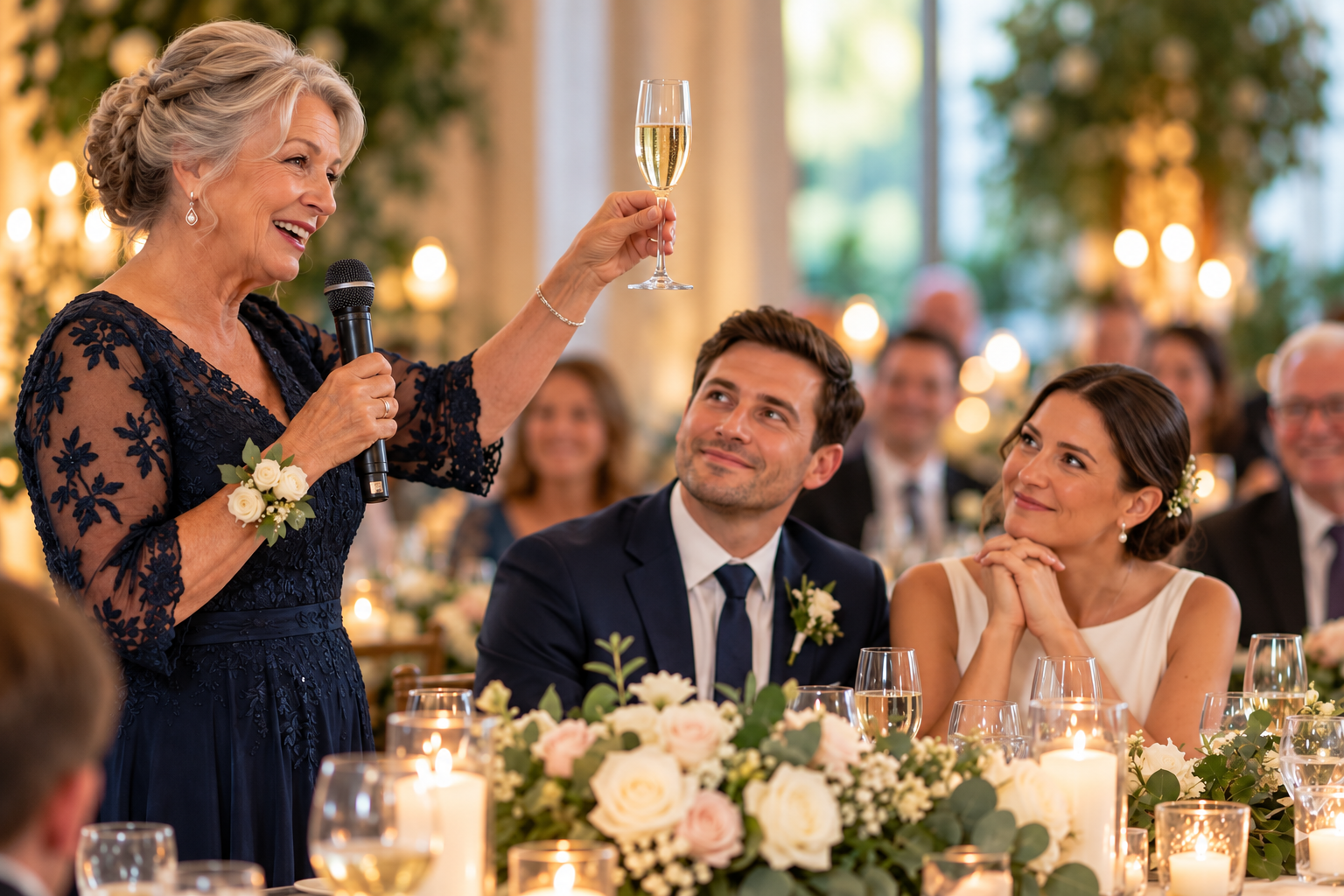
Who Gives Wedding Toasts?
There really isn't one required list anymore.
Traditionally, certain people were expected to give wedding toasts—the father of the bride, best man and groom, for example. Many weddings today look very different.
Parents from either or both families may speak. A sibling may offer a toast. A maid or person of honor may speak. Both partners may thank their guests. Grandparents, children, close friends or other important people may be included.
I've noticed that couples sometimes look primarily to younger family members and friends when deciding who will give the toasts. Don't overlook the older people in your lives.
I've been at weddings where an older parent, grandparent or longtime family friend absolutely knocked it out of the park. Perhaps it comes partly from years of life experience. They have stories to tell, perspective that comes with time, and sometimes a wonderful ability to recognize what really matters.
Someone who has lived a long life may also see the marriage being celebrated from a different perspective. They know something about relationships, about families, about difficult years as well as good ones, and about how quickly the years pass.
Age alone certainly doesn't make someone a good speaker, any more than youth makes someone a poor one. But don't assume that the people giving the toasts need to be members of the couple's generation.
The question doesn't have to be, “Who is supposed to give a toast?”
A better question may be:
“Who has something meaningful to say?”
You also don't need to give everyone who loves the couple a microphone. Too many speeches can turn a warm part of the reception into a long program that guests begin waiting to get through.
Choose a few people whose words will add something special to the celebration.
When Are Wedding Toasts Given?
There is no single correct time for wedding toasts.
At many receptions, toasts are given during dinner. Some couples schedule them shortly after everyone is seated. Others wait until the meal is underway or nearly finished.
There are practical considerations.
If you have several speakers, spreading the toasts throughout dinner can keep them from feeling like one long block of speeches. If the catering staff is serving courses, coordinate with them so someone isn't delivering a heartfelt toast while servers are clearing dishes or asking guests whether they want coffee.
Your DJ, emcee, wedding planner or coordinator can also help make the transition into the toasts feel natural.
The important thing is that people can hear, the speakers aren't competing with other activities, and the couple can actually enjoy the moment.
As you plan the timing of the reception along with all the other details of the day, our step-by-step guide to planning a wedding can help you see how the pieces fit together.
How Long Should a Wedding Toast Be?
Shorter is usually better.
For most wedding toasts, three to five minutes is plenty.
That may not sound like much time, but stand in front of a room and speak continuously for five minutes and you will discover that it is longer than you think.
A toast doesn't become more meaningful because it becomes longer.
If you have ten stories you could tell about the bride, groom or couple, choose the one that says the most. If you have six things you want to tell them, decide which two really matter.
Leave people wishing you had spoken a little longer rather than wondering when you are going to finish.

How to Write a Meaningful Wedding Toast
You don't need to be a professional writer.
You do need to know what you want to say.
Before writing anything, ask yourself:
What do I most want this couple to know?
That question can take you much further than trying to come up with a clever opening.
A simple wedding toast can follow this pattern:1. Introduce Yourself
1. Introduce Yourself
Not everyone at the wedding will know who you are.
Tell them your name and your relationship to the couple.
You don't need a lengthy introduction. One or two sentences are enough.
2. Share Something Personal
This is where the toast becomes yours.
You might tell a short story, describe a quality you admire, recall when you first heard about the relationship, or talk about something you've noticed since the couple came together.
The best stories aren't necessarily dramatic.
Sometimes a small moment reveals much more about a person or a relationship than a grand story does.
3. Bring the Story Back to the Couple
This is an important step.
A wedding toast isn't primarily an opportunity to tell a funny story about your friend or child. The story should lead somewhere.
What does it tell us about this person?
What does it tell us about the relationship?
Why does it make you hopeful about their life together?
That connection turns an anecdote into a meaningful toast.
4. Include Both Partners
If you are the father of one partner, the best friend of another or the sibling who has known one of them since childhood, it is natural that much of your story will involve the person you know best.
But remember why everyone is gathered.
A wedding toast should ultimately honor the couple.
Find a way to acknowledge the other partner and the relationship they are building together.
5. Offer a Wish for Their Marriage
This can be simple.
You may wish them laughter, patience, adventure, friendship, courage, good health or a lifetime of discovering new things about each other.
You don't have to sound profound.
Speak from the heart.
6. Raise Your Glass
Finish clearly.
Invite the guests to raise their glasses and join you in honoring the couple.
Then give them something worth raising their glasses to.
What Makes a Wedding Toast Memorable?
People sometimes think a memorable toast needs a memorable joke.
It doesn't.
Humor can be wonderful, especially when it comes naturally to the person speaking. But warmth, honesty and affection are more important.
Think about the wedding toasts you have heard over the years. Chances are you don't remember every clever line.
You may remember the father whose voice broke when he talked about his daughter.
You may remember the lifelong friend who told one story that perfectly captured who the groom was.
You may remember a mother welcoming a new son or daughter into the family.
You may remember laughing because the story was funny—but also because it was true.
Those moments work because they are human.
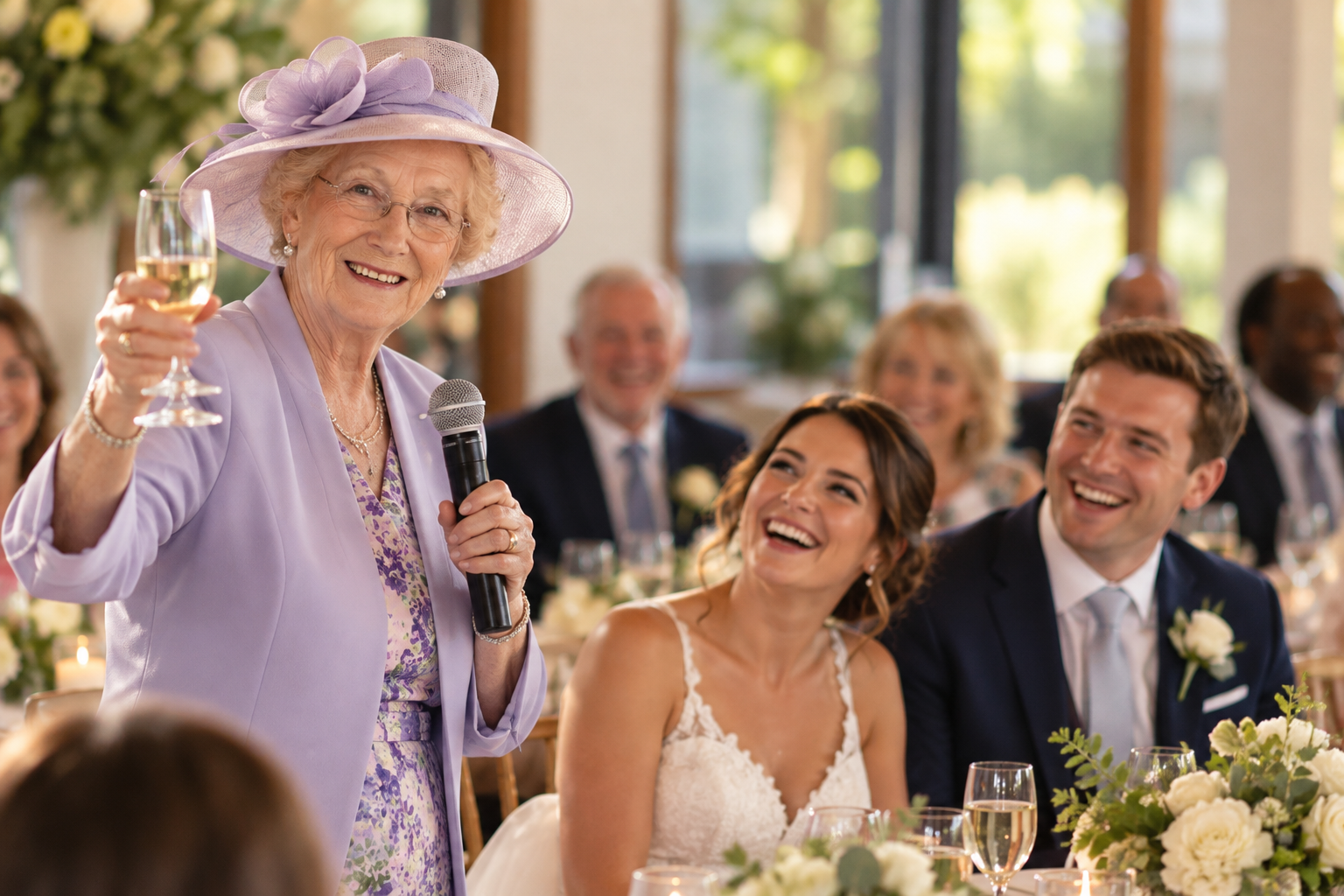
Wedding Toasts Bring People Together
There is something about a toast that is different from almost anything else that happens during a wedding reception.
One person may be doing the speaking, but in a sense, everyone in the room participates.
When the speaker finally says, “Please raise your glasses,” the guests aren't simply following instructions. By raising their glasses together, they are joining in the good wishes that have just been expressed. For a brief moment, family members, longtime friends, new friends and people from different parts of the couple's lives become part of one shared gesture.
I think that's one of the reasons the tradition of the wedding toast has lasted.
The words may come from one person, but the sentiment belongs to the room.
That's also why the ending of a toast matters. After you've shared your story, your memories or your hopes for the couple, give the guests a clear invitation to join you:
“Please raise your glasses with me…”
Then offer one simple wish for the couple and allow everyone gathered to become part of it.
A good wedding toast doesn't just say something about the couple. For a few moments, it brings the people who care about them together.
Should a Wedding Toast Be Funny?
It can be.
It doesn't have to be.
If humor is natural for you, use it. Laughter can relax the room and make a wedding toast delightful. But don't feel that you need to become a comedian simply because you've been asked to speak.
I've also seen humor work against the person giving the toast.
At one wedding, the speaker used an old line:
“It has been said that a man is not complete until he is married. Then he is finished.”
He was obviously trying to get a laugh.
It didn't work.
The joke fell flat, and from where I was sitting, the bride appeared to be offended. Instead of adding warmth to the moment, the joke briefly took it away.
That's the danger with humor at a wedding. Jokes about marriage being miserable, husbands being trapped, wives being difficult or either partner surrendering their freedom may once have been common wedding humor. That doesn't mean they belong in your toast.
You aren't there to get a laugh at the couple's expense.
Years ago, when my children were growing up, I used to tell them something about humor:
“If it isn't fun for everyone, it isn't fun.”
I think that's a pretty good rule for wedding toasts, too.
The best wedding humor doesn't require a victim. It grows naturally out of affection—a funny story, a recognizable personality trait or something about the couple that allows everyone, including the couple, to laugh together.
Before including a joke or funny story, ask yourself two questions:
Will the couple enjoy this as much as everyone else?
And perhaps even more importantly:
Will the couple still enjoy this story tomorrow?
If you're not sure, leave it out.
There will always be another joke. There may not be another opportunity to give these particular words to people you care about on their wedding day.
What Should You Avoid in a Wedding Toast?
A few things can quickly take attention away from the couple.
Avoid:
- stories that humiliate either partner
- inside jokes that almost no one understands
- criticism disguised as humor
- references to former partners
- family conflicts or old grievances
- stories involving excessive drinking, drugs or sexual exploits
- comments about when the couple will have children
- jokes about divorce or marriage being miserable
- turning the toast into a speech about yourself
You know your audience better than anyone else. Use good judgment.
The goal isn't to prove how entertaining you can be.
The goal is to honor the couple.
Should You Write Your Wedding Toast in Advance?
Yes. I strongly recommend it.
I've attended weddings where it was obvious that the person giving the toast had prepared carefully. The stories were well chosen, the thoughts were clear, and the words seemed to fit the moment. What sounded natural and effortless was often effective precisely because a great deal of thought had gone into it beforehand.
I've also attended weddings where the person giving the toast relied on being spontaneous and speaking “from the heart,” without much preparation. The intention may have been just as sincere, but the result was often not nearly as effective, meaningful or memorable.
Speaking from the heart and preparing aren't opposites.
In fact, preparation can help you discover what it is that you really want to say.
Write down your thoughts. Decide which stories are worth telling and which ones aren't. Look for the unnecessary words and take them out. Then read your toast aloud several times.
Something that looks wonderful on a screen can sound awkward when spoken. Reading it aloud will also tell you how long your toast really is.
Then decide how much you need in front of you. Some people are comfortable with a few notes. Others prefer having the complete toast available.
There is no prize for memorizing it.
The guests care much more about what you say than whether you occasionally look at a piece of paper.
How to Deliver a Wedding Toast
Once you know what you want to say, the delivery becomes much easier.
Speak Slowly
Most of us speak faster when we're nervous.
Slow down.
Give people time to hear your words and respond to them.
Look at the Couple
You are speaking to a room full of people, but your words are ultimately for the couple.
Look at them.
That simple act can transform a speech from a performance into a personal moment.
Use the Microphone—and Let People See You
I've been at weddings where someone begins a toast by saying, “I think everyone can hear me, so I'm not going to use the microphone.”
Usually, they can't.
A reception room filled with people, conversation, dishes and background noise is very different from talking across a dinner table. Some guests may also have difficulty hearing even when the room seems quiet to you.
I've also seen people give their entire toast while standing beside their chair rather than moving to the microphone, podium or another place where everyone can see them.
I understand the thinking behind this. Standing at your table without a microphone can seem warmer, more intimate and less formal. But what feels intimate to the speaker can have exactly the opposite effect on the people gathered. If guests are straining to hear you or can't see you, they become disconnected from what you're saying.
If a microphone is available, use it.
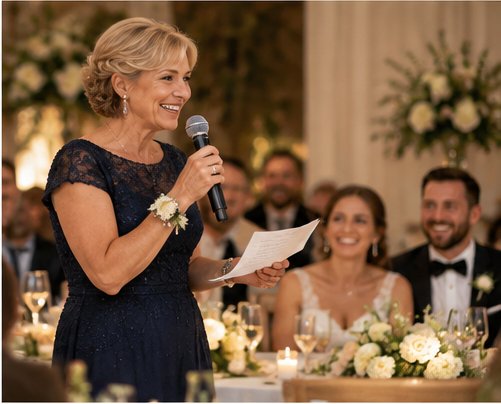
And whenever possible, stand somewhere that allows the guests—and especially the couple—to see you. You don't necessarily need a formal podium or platform, but don't hide yourself in the middle of a crowded room.
A wedding toast is meant to be shared. Warmth isn't created by avoiding the microphone. It comes from what you say and how you say it.
Give everyone in the room the opportunity to be part of the moment.
Don't Rush the Laughter
If people laugh, let them.
Don't begin your next sentence while everyone is still reacting to the last one.
The same applies to emotional moments. A little silence isn't a problem.
Let Yourself Be Human
You may become emotional.
That's all right.
A trembling voice or a moment when you need to collect yourself isn't a failed toast. Sometimes it is precisely the moment people remember.
What If You're Nervous About Giving a Wedding Toast?
You are in good company.
Public speaking makes many people nervous, and a wedding can add another layer because the occasion matters to you. You want to say the right thing, and suddenly even words you know well can feel difficult to say.
I learned something about this many years ago.
When I was in public school, I was a very poor reader. Reading aloud was particularly difficult for me. I would hesitate over words, and my reading was painfully halting rather than smooth and natural.
Fortunately, I had a very wise Grade 5 teacher.
One day he took me aside and gave me some unusual advice. He told me to get a book, go outside, find a tree where no one was around, sit down—and read the book out loud.
His explanation has stayed with me all these years.
He believed I was afraid of the sound of my own voice.
So I did what he suggested. With no classmates listening, no one judging me and no reason to be embarrassed, I could simply hear myself speak.

There may be a lesson in that for anyone preparing a wedding toast.
Don't practice it only in your head. Say it out loud.
You can practice in front of a mirror if that helps, but you don't need an audience. Go into an empty room. Sit outside where no one is around. Take a walk. Stand in your garage. Find someplace where you can hear yourself say the words without worrying about anyone listening.
You'll discover sentences that looked wonderful on paper but don't sound like you. You'll hear where you're rushing. You'll find words that are difficult to say naturally. And after you've heard yourself give the toast several times, your own voice begins to sound familiar rather than intimidating.
Then, if you're comfortable doing so, give the toast once to someone you trust. Ask them a simple question:
“Does this sound like me?”
You aren't trying to memorize a performance. You're becoming comfortable with words you have already decided are worth saying.
There is one more part to my Grade 5 story.
That student who struggled to read aloud eventually became quite comfortable speaking before groups. Over the years, people have complimented me on my public speaking and, on more than one occasion, told me that I speak with gravitas.
I don't tell you that to boast. I tell you because I certainly didn't start there.
Somewhere along the way, I became comfortable with the sound of my own voice. And I have never forgotten the teacher who first helped me begin.
Preparation won't necessarily make every nervous feeling disappear. But when you stand to give your toast, you won't be hearing those words—or the sound of your own voice saying them—for the first time.
So if giving a wedding toast makes you nervous, don't conclude that you simply aren't a public speaker.
Find your own tree.
Take your toast somewhere you can be alone and say it out loud.
Then say it again.
You may be more capable of giving those words than you think.
What If You're Asked to Give an Unplanned Toast?
This happens.
Someone finishes a toast, another person is handed the microphone, and suddenly someone says, “Would you like to say something?”
You may not have planned to speak at all.
Don't panic, and don't try to invent a five-minute speech.
Keep it short.
Say who you are if necessary. Share one sincere thought about the couple. Offer one wish for their future. Raise your glass.
That's enough.
In fact, an unplanned thirty-second toast that comes from the heart can sometimes be more memorable than a carefully prepared ten-minute speech.
And if you truly don't want to speak, it is perfectly acceptable to graciously decline.
Who Should the Toast Be Addressed To?
Traditionally, many wedding toasts were directed primarily toward the bride or groom.
Today, it usually makes more sense to focus on the couple.
That doesn't mean every sentence has to be evenly divided between two people.
If you've known one partner for thirty years and the other for three, pretending otherwise can sound artificial.
Talk honestly about the relationship you have.
Then widen the circle.
A parent might begin with memories of a son or daughter and eventually talk about watching that person fall in love.
A best friend might tell a story about years of friendship and then describe what changed when the partner entered the picture.
The toast moves naturally from the person you have known to the couple you are celebrating.
Wedding Toast Examples
There is no single formula for a good wedding toast.
The words should fit the speaker, the couple and the celebration.
Here are a few starting points.
A Short and Simple Wedding Toast
“May you always find friendship in each other, laughter in ordinary days and strength in one another when life isn't easy. May the love that brought you here today continue to deepen through all the years ahead. To both of you.”
A Toast from a Parent
“When you are a parent, you spend years hoping your child will build a life filled with people who love them, respect them and encourage them to become fully themselves. Watching the two of you together, I see that kind of love. May you continue to bring out the best in one another and build a home filled with laughter, patience and love. To both of you.”
A Toast from a Close Friend
“I've known [Name] for a long time, and I've been fortunate enough to share a lot of life with them. But one of the happiest things I've witnessed is the life the two of you have created together. You make each other laugh, you support each other, and somehow you seem even more yourselves when you're together. May that always be true. To [Name] and [Name].”
A Lighthearted Wedding Toast
“Marriage will bring wonderful adventures, unexpected surprises and probably a few discussions about things neither of you ever imagined having strong opinions about. Through all of it, may you keep laughing, keep listening and keep choosing each other. To a long and happy life together.”
A Toast About the Years Ahead
“Today celebrates the love that brought you here. My wish is that years from now you will look back and realize that today was only the beginning—that the best parts were the ordinary mornings, unexpected adventures, difficult days you got through together, and thousands of small moments that became a life. To the years ahead.”
Wedding Toasts from Parents
A parent's toast can be particularly meaningful because it connects the couple's future with the lives that brought them to this moment.
You might share a childhood memory, but don't spend the entire toast talking about childhood.
The wedding isn't only about the person your son or daughter used to be. It is also about the adult they have become and the person they have chosen to share their life with.
Welcome the new spouse or partner.
Talk about what you've observed in their relationship.
And don't feel pressured to offer marriage advice unless you genuinely have something you want to say.
Sometimes “We love you, we are proud of you, and we are delighted to welcome you into our family” is more meaningful than a list of lessons about marriage.
Wedding Toasts from the Best Man, Maid of Honor or Wedding Party
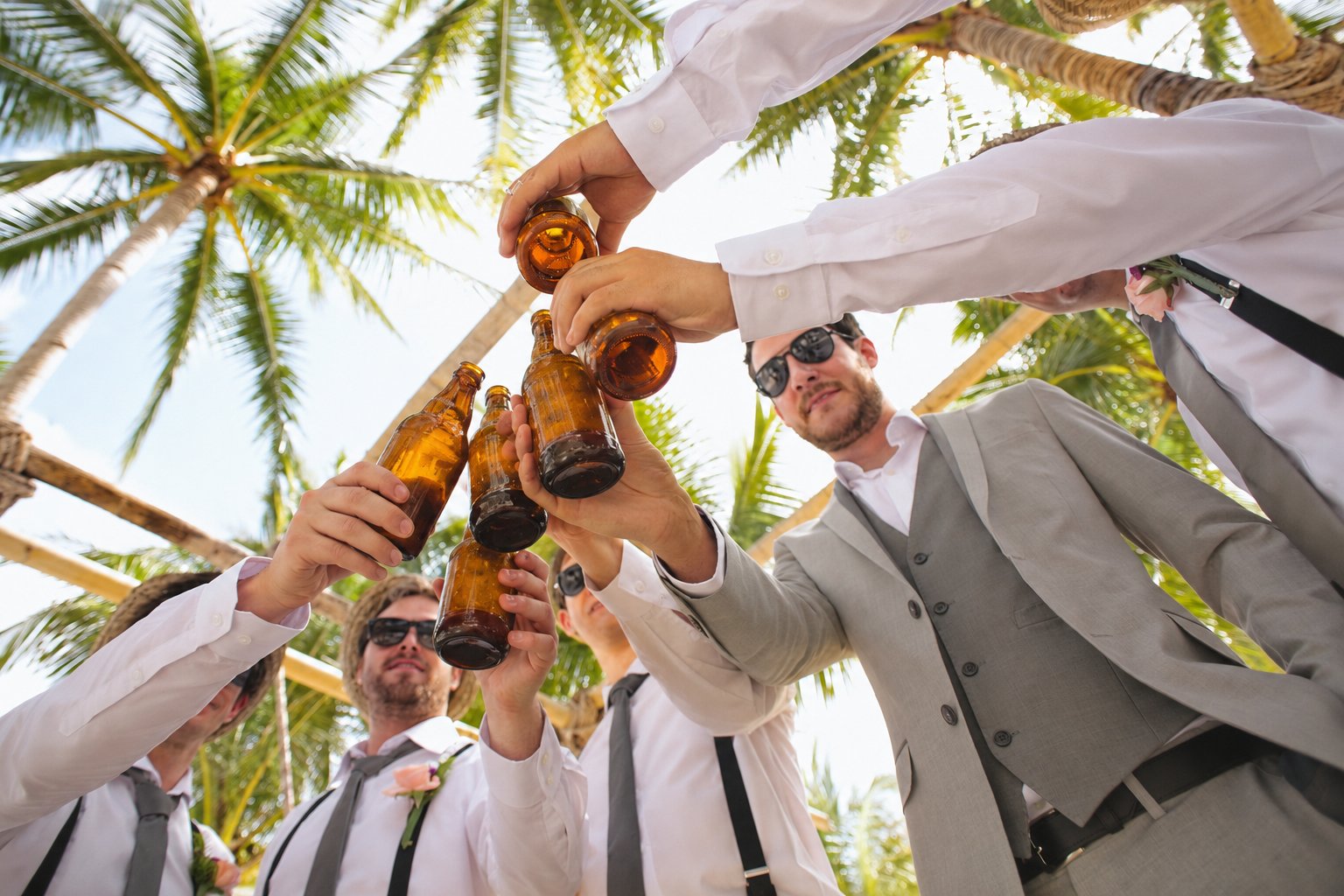
Wedding-party toasts often have one great advantage: stories.
You may have known one of the partners through college, work, childhood, travel or years of friendship.
Use that history.
But choose the story carefully.
The best story isn't necessarily the funniest one you know. It is the one that helps the guests understand something about your friend and why you are happy they found the person sitting beside them.
A good wedding-party toast often has a simple arc:
This is the person I have known.
This is what happened when they met their partner.
This is why I believe they are wonderful together.
That is plenty.
Can Both Partners Give a Toast?
Absolutely.
A toast from the newly married couple can be a wonderful opportunity to thank the people who helped make the celebration possible.
You might thank your families, wedding party, guests and anyone who traveled a significant distance to be with you.
But don't turn it into an awards ceremony in which every vendor and relative has to be mentioned individually.
The larger message is simple:
Thank you for being part of our lives and for sharing this day with us.
If there are particular people whose contribution deserves special recognition, certainly acknowledge them.
Then enjoy your wedding.
If you're also working on the words that will be spoken during the ceremony itself, our complete wedding ceremony script guide walks through the ceremony from beginning to end.
Can You Give a Wedding Toast Without Alcohol?
Of course.
The meaning of a toast is in the words and the gesture, not in what is in the glass.
Champagne may be traditional, but guests can raise wine, sparkling cider, water or whatever they are drinking.
No one should ever feel pressured to drink alcohol in order to participate in a wedding toast.
How Should You Hold Your Glass?
This may seem like a small detail, but I have a particular opinion about it.
If you're using a traditional wine or champagne glass, hold it by the stem. The stem isn't there simply for decoration. It allows you to hold the glass without warming the wine with your hand, and it keeps fingerprints off the bowl so the glass retains its clear, sparkling appearance.
For some reason, you don't always see this done correctly—even in movies set in vineyards. But particularly at a formal occasion such as a wedding, holding the glass by the stem is both practical and elegant.
You don't need to keep your glass raised throughout your toast. That quickly becomes awkward. Leave it on the table or hold it comfortably while you speak, then raise it by the stem when you invite the guests to join you in honoring the couple.
And yes, I admit to having a personal bias here: I much prefer a traditional stemmed wine glass to a stemless one. A stemmed glass was designed that way for a reason.
There are certainly occasions when none of this matters very much. Sitting outdoors at a vineyard with friends, I would be perfectly happy drinking wine from a simple water glass. But a wedding is usually a more formal occasion, and sometimes those small details add to the sense that this is a special celebration.
What About Several Wedding Toasts?
Several toasts can be wonderful.
Ten usually aren't.
If a number of people want to speak, decide ahead of time who will give formal toasts. Other friends and family members can share their good wishes personally throughout the reception.
You can also distribute the formal toasts throughout the meal rather than presenting them one after another.
Whatever you decide, tell the speakers approximately how long they have.
A little planning protects everyone—including the guests.
The Traditional Order of Wedding Toasts
There are traditional orders for wedding speeches and toasts, but they vary by culture, family tradition and type of wedding.
At many contemporary weddings, the order is simply whatever works best for the couple and the reception schedule.
Parents might speak first, followed by members of the wedding party. The couple may speak last to thank everyone.
At another wedding, the best man might speak first. At another, there may be only one toast.
Tradition can provide a useful starting point.
It doesn't have to become a rule.
Five Things I Would Remember About Giving a Wedding Toast
If you forget everything else on this page, remember these five things.
1. Keep it personal.
Generic words are easily forgotten. Say something that could only come from you.
2. Keep it relatively short.
You don't have to tell every story you know.
3. Include the couple.
Even if you know one person much better, remember what you're celebrating.
4. Don't confuse embarrassment with humor.
Even if you know one person much better, remember what you're celebrating.
5. Speak from the heart.
Perfect words are overrated. Sincere words aren't.
Wedding toasts are only one part of creating a celebration that feels personal and true to you. For help with everything from the guest list and ceremony to the reception itself, visit our complete step-by-step wedding planning guide.
A Wedding Toast Is a Gift
A wedding toast is one of the few wedding gifts that doesn't come wrapped in a box.
You are giving the couple your memories, your affection, your hopes for them and, for a few minutes, your voice.
You don't have to impress the room.
You don't have to make everyone laugh.
You don't have to sound like someone you aren't.
Know what you want to say. Prepare enough that you can say it comfortably. Look at the people you are honoring.
And then say what you mean.
Years from now, the couple probably won't remember every word.
But they may remember how your words made them feel.