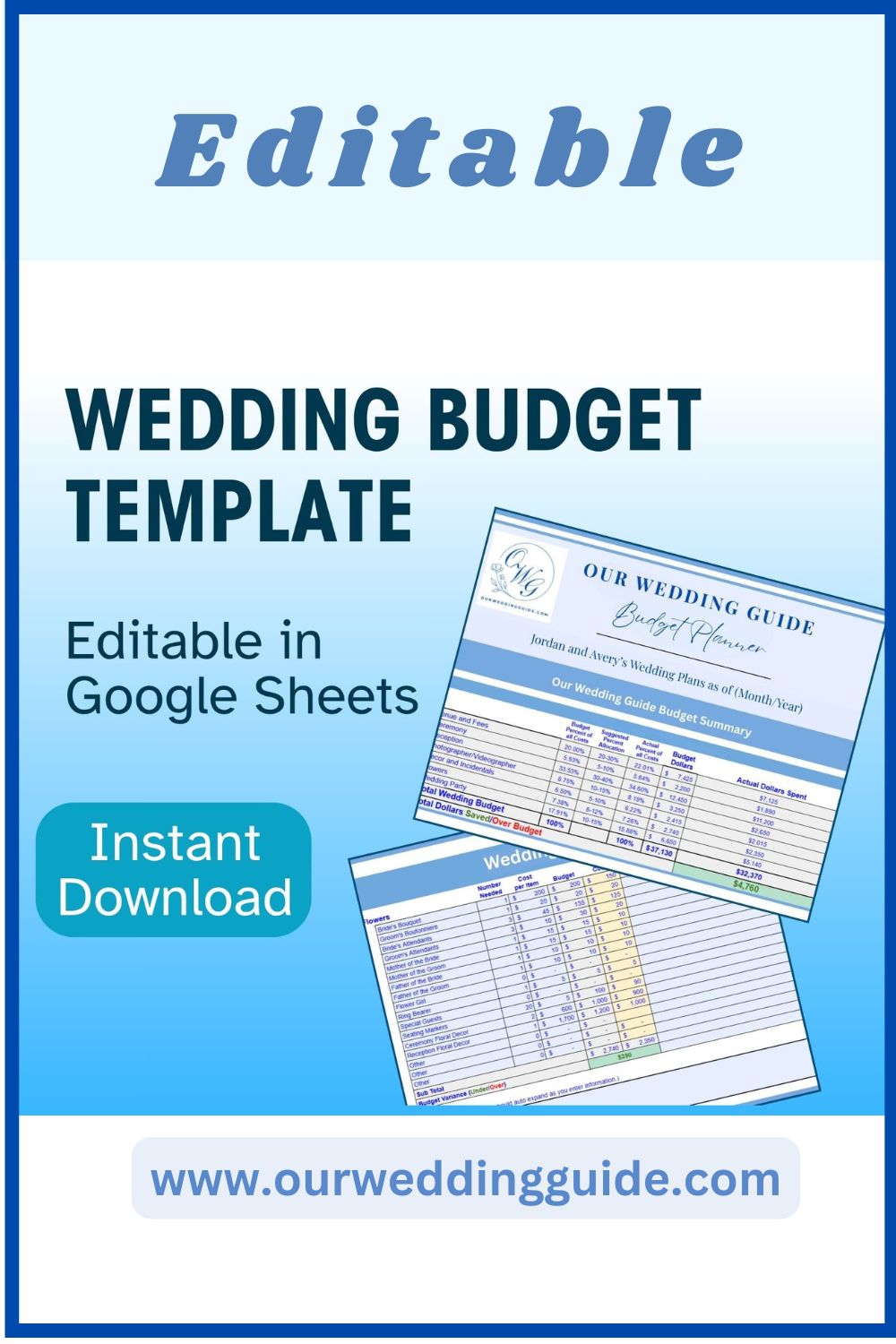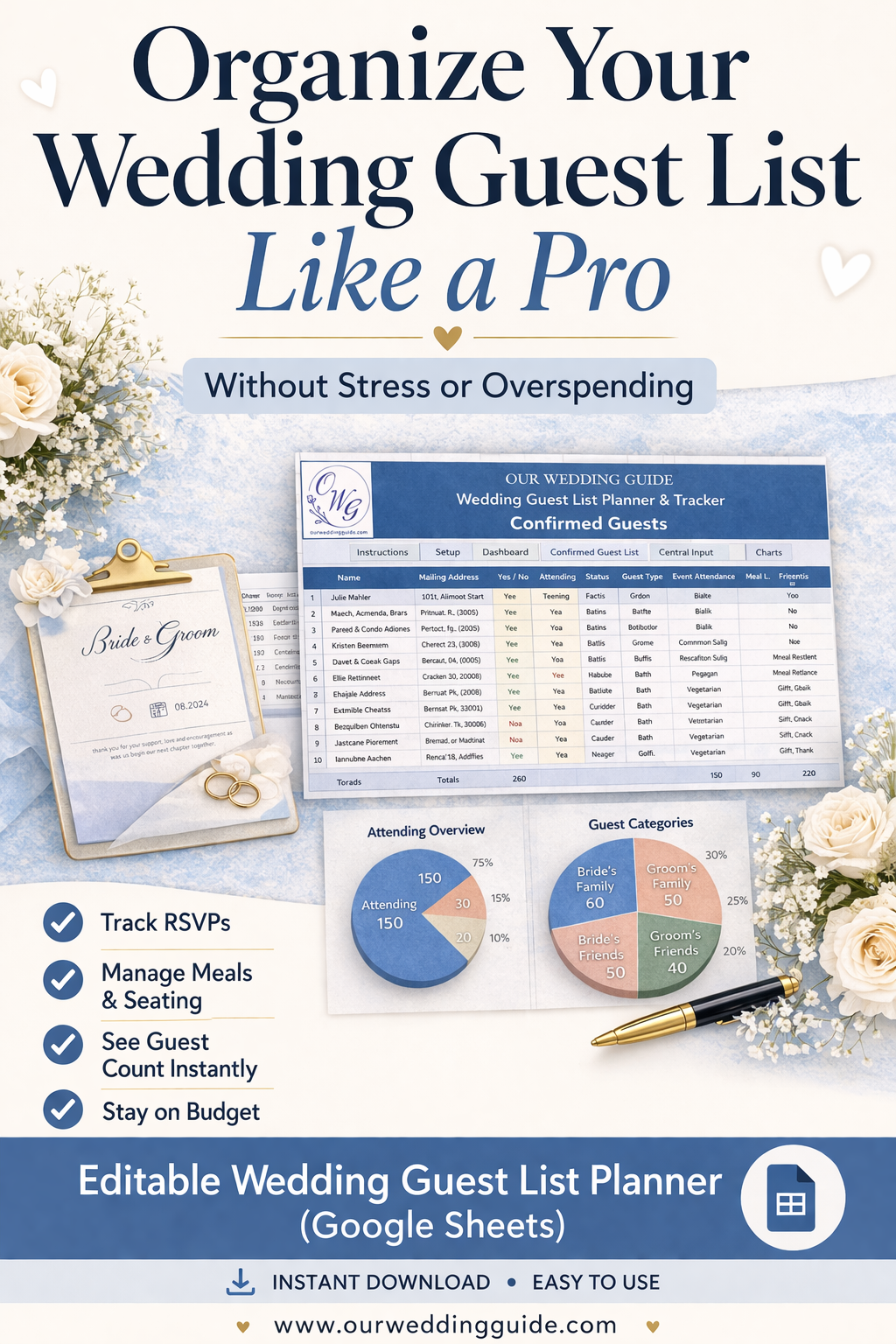
How to Plan a Wedding Budget Without Overspending
Introduction
Learning how to plan a wedding budget is one of the first and most important steps in wedding planning. As soon as you become engaged, it is natural to start thinking about venues, flowers, and guest lists, but without a clear wedding budget, those decisions can quickly become stressful and expensive. When you take time to plan a wedding budget thoughtfully, you create a framework that helps guide every decision that follows, bringing a greater sense of control to your planning without overspending—especially when using a simple wedding budget template to track your decisions.
As you begin planning your wedding, it is easy to underestimate how quickly wedding costs can grow. Small choices add up—guest lists expand, décor becomes more elaborate, and upgrades appear tempting at every stage. Thoughtful wedding budget planning allows you to step back and evaluate each decision based on what matters most to you as a couple, helping you manage wedding costs and stay on budget rather than reacting to expenses as they arise.

Planning a wedding budget is not simply a financial task; it is also an opportunity to strengthen your partnership. Wedding budget planning invites you to talk together about priorities, expectations, and financial limits, helping you develop the communication skills that will support your marriage long after your wedding day. As you learn how to plan a wedding budget together, you move beyond managing wedding costs—you begin practicing thoughtful financial planning as a couple. In that sense, this process becomes more than a planning exercise; it becomes one of the first meaningful steps in building the life you are preparing to share.
Wedding Budget Planning Tips to Stay on Budget
- Start by deciding how much you can realistically spend without creating financial stress.
- Identify your top priorities as a couple before allocating money to specific categories.
- Estimate your guest count early, since many wedding costs are calculated per person.
- Divide your wedding budget into major categories such as venue, catering, photography, attire, and décor.
- Reserve 5–10% of your budget for hidden or unexpected wedding expenses.
How to plan a wedding budget (Step by Step Guide)
Planning a wedding budget begins with deciding how much you can realistically spend, then identifying your priorities as a couple, and estimating your guest count. From there, allocate your budget across key categories such as venue, catering, photography, attire, and décor.
A thoughtful wedding budget helps you manage wedding costs while focusing your spending on what matters most.
Start your planning with clarity—before the details become overwhelming.
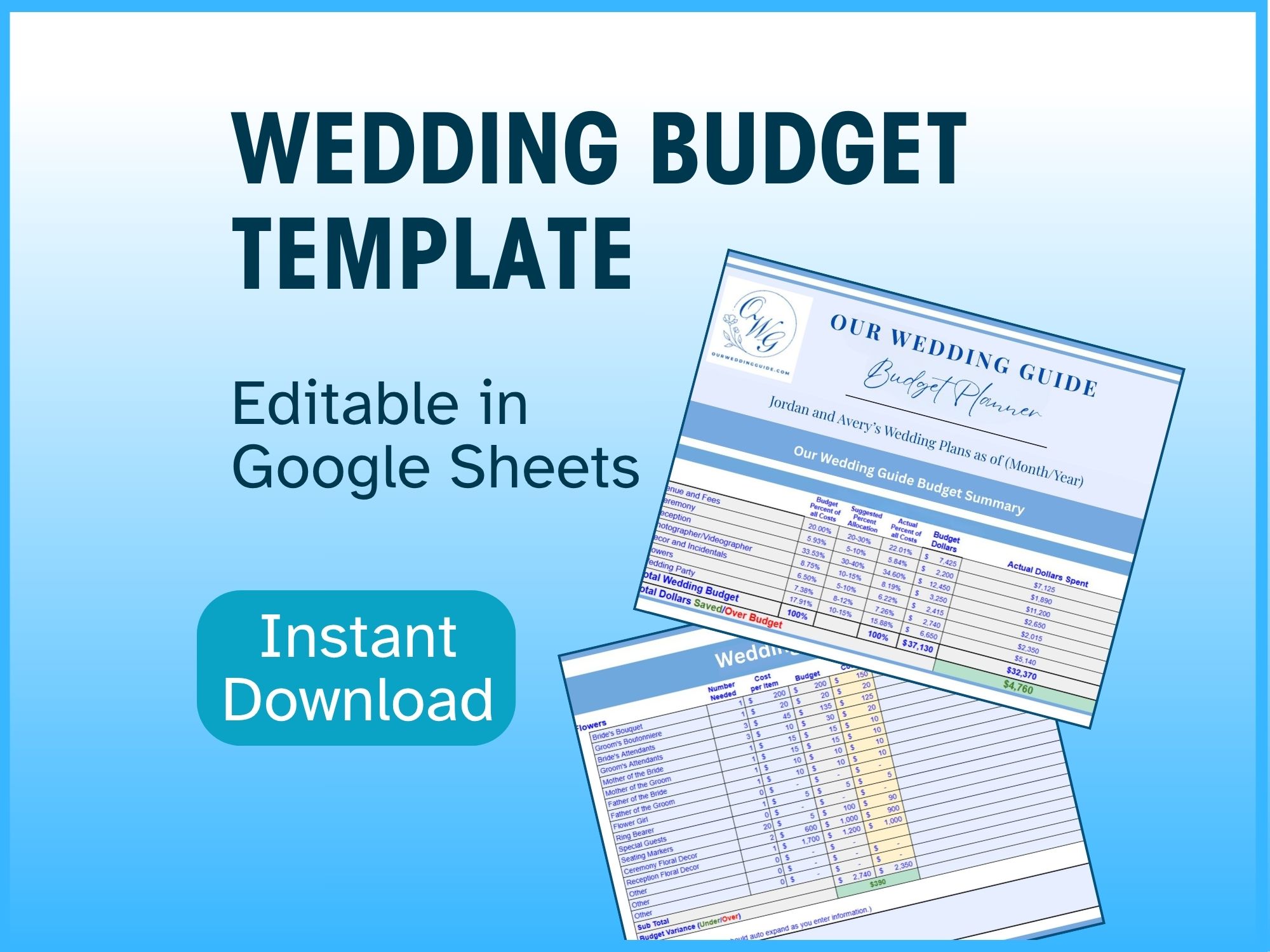
Instant download . Editable in Google Sheets
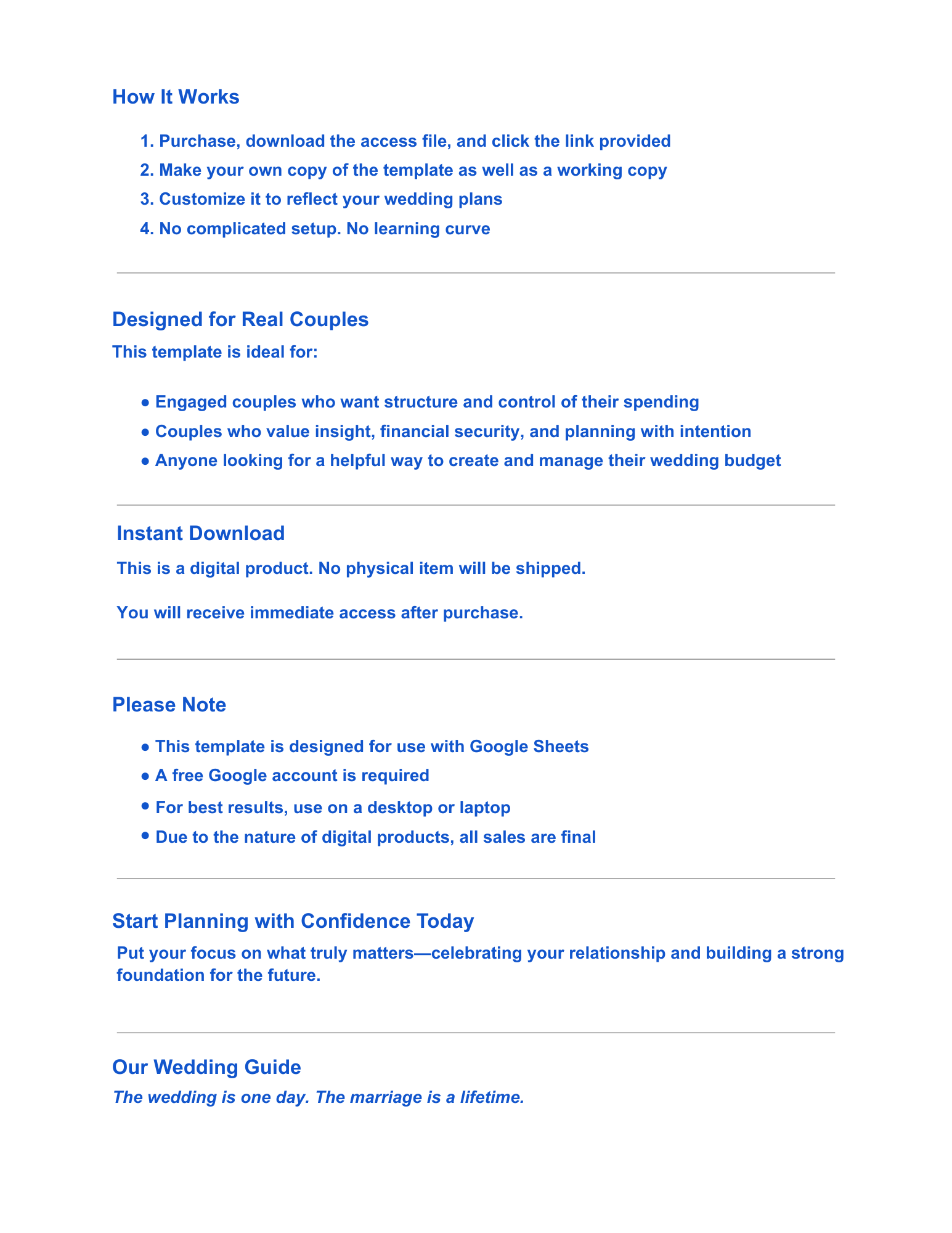
Instant download . Editable in Google Sheets
Step-by-Step Guide to Planning a Wedding Budget
Learning how to plan a wedding budget begins with clarity, not guesswork. Before you make deposits or compare packages, it helps to step back and create a framework for your decisions. A thoughtful wedding budget gives you a way to evaluate wedding costs, stay aligned as a couple, and reduce the stress that often comes from making financial decisions too late.
Step 1: Decide What Matters Most to You
Before you assign numbers to categories, take time to talk about what matters most to both of you. Every couple has different priorities. You may care most about the atmosphere of the venue, the quality of the food, the photographs you will keep for years, or the opportunity to gather the people who matter most in one place.
This conversation is important because a wedding budget should reflect your values, not simply outside expectations or current trends. When you are clear about your priorities, you can spend with greater intention and avoid putting too much of your budget toward details that are less meaningful to you.
Step 2: Set Your Total Wedding Budget

Once you have discussed your priorities, determine the total amount you can realistically spend. This should include any personal savings you plan to use, any contributions from family, and a clear understanding of what feels financially responsible for your situation.
A realistic wedding budget is not just about what you hope to spend. It should reflect what you can comfortably afford without creating unnecessary financial pressure as you begin married life. Starting with a clear total budget gives structure to every decision that follows and helps prevent the planning process from becoming reactive.
Step 3: Clarify Who is Paying for What
If family members are contributing to the wedding, it is helpful to discuss this early and as clearly as possible. Some families offer a set amount, while others may wish to cover a specific part of the celebration, such as the venue, rehearsal dinner, or flowers.
Clarifying who is paying for what can prevent confusion and reduce tension later in the planning process. It also helps you understand which decisions you can make independently and which may involve additional conversations. When expectations are discussed openly at the beginning, your wedding budget becomes more accurate and easier to manage.
Step 4: Estimate Your Guest Count
Your guest count has a direct effect on many of the largest wedding costs, including venue, catering, rentals, invitations, and bar service. Before you begin booking major vendors, create an estimated guest list so you have a realistic sense of the size of the celebration you are planning.
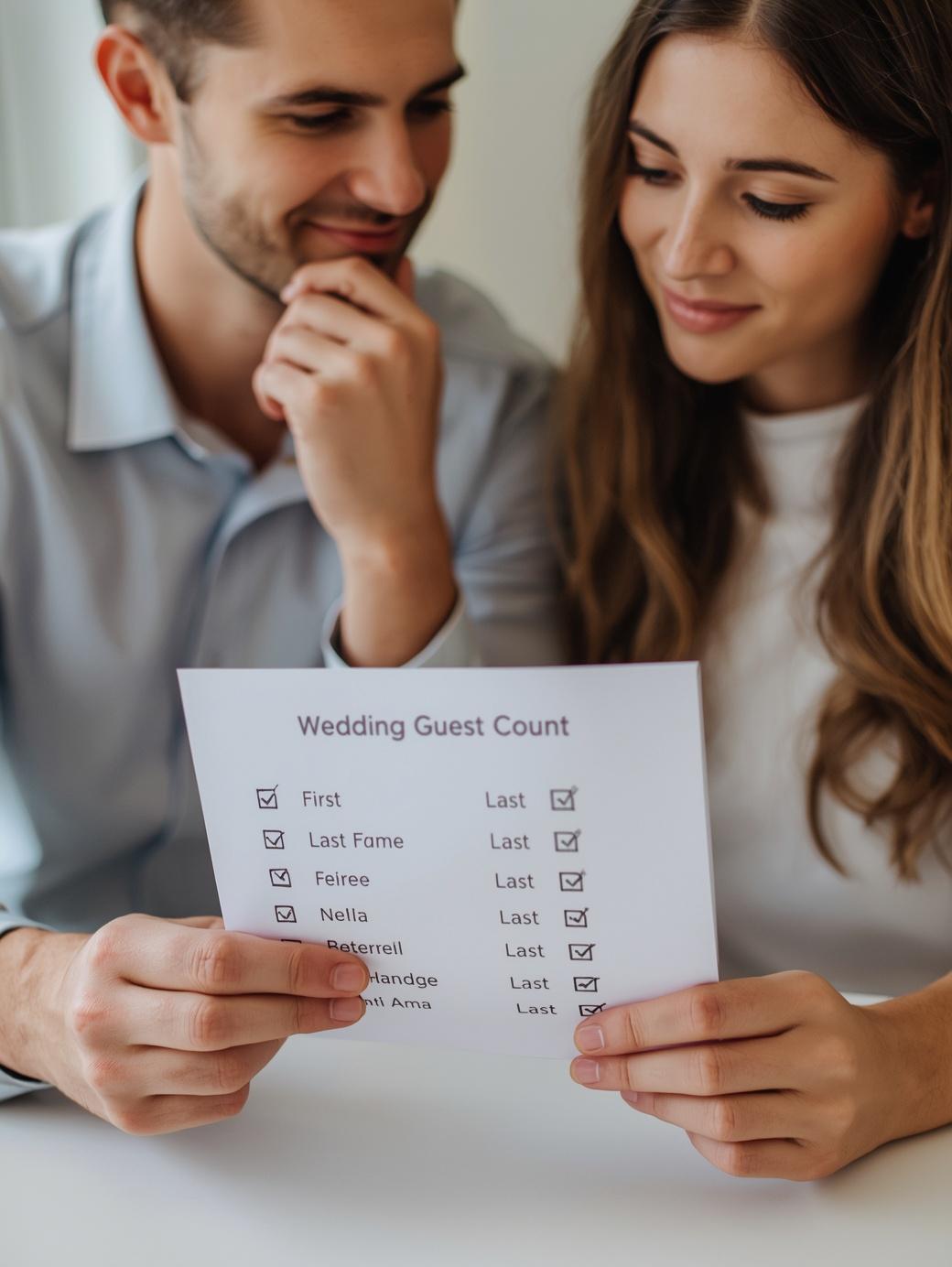
Even a modest increase in guest count can affect multiple budget categories at once.
Because of this, your guest list is one of the most powerful factors in shaping your overall wedding budget.
A clear estimate allows you to evaluate options more accurately and avoid building a plan around assumptions that may later change.
Step 5: Divide Your Wedding Budget Into Categories
After setting your total budget and estimating your guest count, begin allocating funds across the major expense categories. These often include venue and catering, photography, attire, flowers and décor, entertainment, stationery, transportation, and miscellaneous costs.
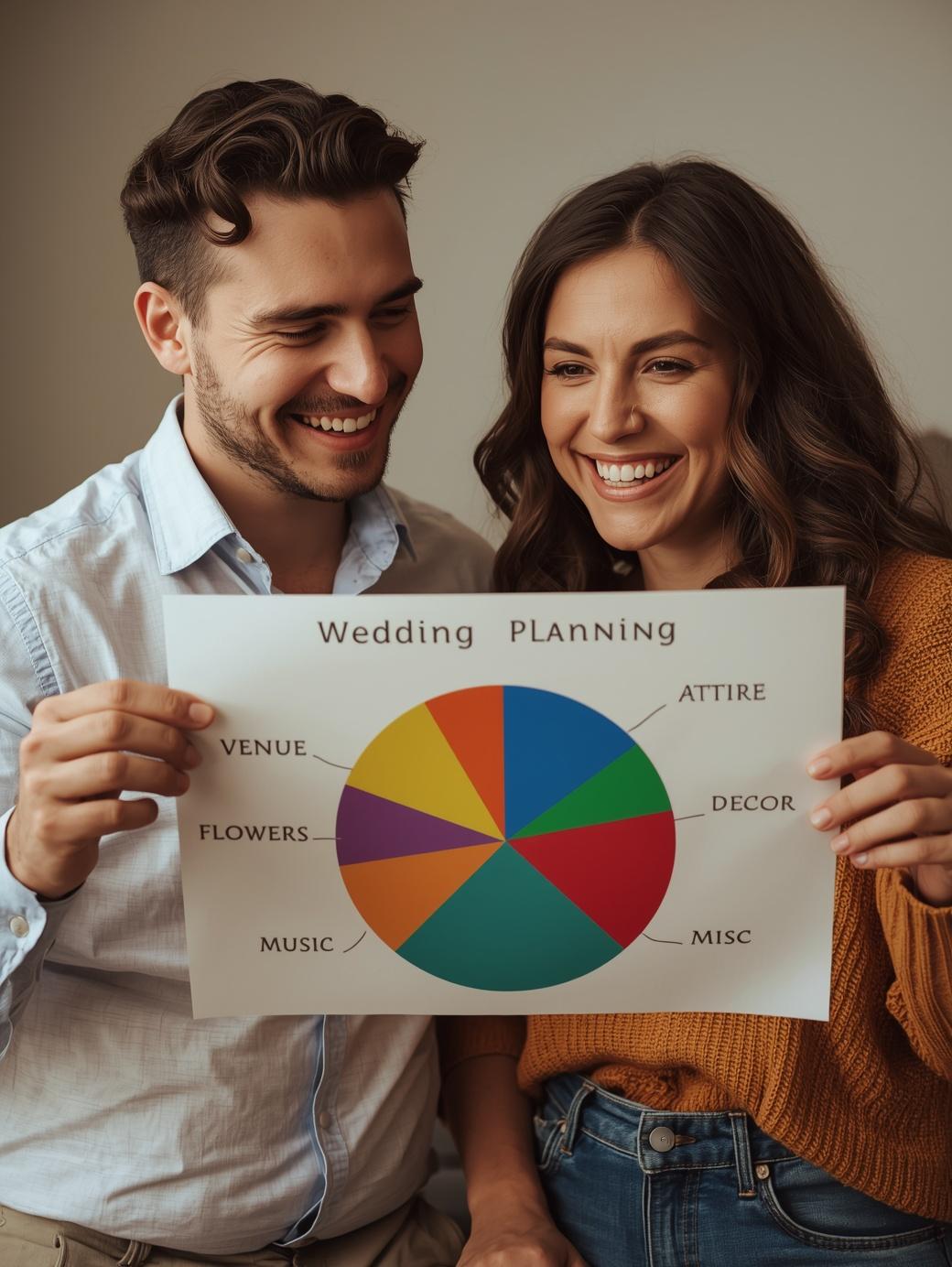
At this stage, it is helpful to think in percentages as well as dollar amounts. A wedding budget breakdown can give you a practical starting point, but your final allocations should reflect your own priorities.
If photography matters deeply to you, that category may deserve a larger share. If you want a simpler celebration, you may decide to reduce spending on décor or stationery.
Step 6: Research Real Wedding Costs Before You Commit
Once you have created your initial budget categories, begin researching actual prices in your area. Wedding costs vary widely depending on location, season, guest count, and vendor experience. A category that seems reasonable in theory may turn out to be more expensive in practice.
As you gather pricing information, compare your early estimates with real proposals and adjust your wedding budget accordingly. This is one of the most important steps in learning how to plan a wedding budget realistically. It allows you to replace assumptions with information and make decisions based on the market you are actually working in.
Step 7: Track Every Expense
A wedding budget only works if you keep it current. As you book vendors, place deposits, and make purchases, track each expense in one place. This may be a spreadsheet, a planning binder, or a budgeting tool that allows you to monitor totals and balances.
Tracking expenses consistently helps you stay aware of how much you have committed and how much remains. It also makes it easier to notice when one category is growing faster than expected, so you can adjust before the budget becomes difficult to manage.
Step 8: Leave Room for Hidden and Unexpected Costs
Most weddings include expenses that couples do not fully anticipate at the beginning. Alterations, vendor meals, gratuities, delivery fees, postage, overtime charges, and last-minute additions can all affect your total wedding cost.
For this reason, it is wise to reserve part of your wedding budget as a contingency fund. Setting aside even 5 to 10 percent for unexpected expenses can make the planning process far less stressful. Flexibility is part of a realistic budget, and leaving room for the unexpected helps you avoid feeling unprepared when smaller costs arise.

Step 9: Revisit Your Budget Together Regularly
Your wedding budget should not be created once and then ignored. As plans develop, it helps to review your budget together regularly so you can stay aligned and make thoughtful adjustments. A decision in one category may require changes elsewhere, and revisiting your numbers helps you respond with intention rather than frustration.
These check-ins are also valuable because they reinforce communication. Wedding planning involves many moving parts, and regular conversations about spending can help you remain connected as a couple while working through practical decisions together.
Step 10: Let Your Budget Serve Your Priorities
The purpose of a wedding budget is not to restrict joy or reduce the meaning of the celebration. It is to help you make decisions with clarity, confidence, and purpose. When your spending reflects your values, the budget becomes a tool that supports the kind of wedding experience you truly want to create.
As you learn how to plan a wedding budget, remember that the goal is not perfection. The goal is to create a plan that is realistic, intentional, and supportive of the life you are beginning together.
If you’d like, I can write the next section, Wedding Budget Mistakes Couples Often Make, in the same style so the article continues smoothly.
Wedding Budget Breakdown: Typical Wedding Costs
Understanding how wedding costs are typically distributed can help you make more informed decisions as you plan your wedding budget. While every celebration is different, most weddings include several core expense categories that account for the majority of the total budget. Looking at a typical wedding budget breakdown can provide a useful starting point as you begin allocating funds.
For many couples, the venue and catering represent the largest portion of the wedding budget. These costs are often tied directly to guest count, which is why the number of people you invite has such a significant impact on your overall spending. Other major categories usually include photography and videography, attire, flowers and décor, entertainment, and stationery.
A common wedding budget breakdown might look something like this:
- Venue and catering: 40–50%
- Photography and videography: 10–15%
- Attire and accessories: 5–10%
- Flowers and décor: 8–10%
- Music and entertainment: 5–8%
- Stationery and invitations: 2–4%
- Transportation and miscellaneous expenses: 5–10%
These percentages are not rules, but they provide a helpful framework as you begin planning. Some couples choose to spend more on photography to capture the memories of the day, while others prioritize food, music, or the atmosphere of the venue.
As you plan your wedding budget, think of these categories as guidelines rather than limitations. The purpose of a wedding budget breakdown is not to dictate how you spend your money, but to help you allocate resources in a way that reflects your priorities and the experience you hope to create for yourselves and your guests.
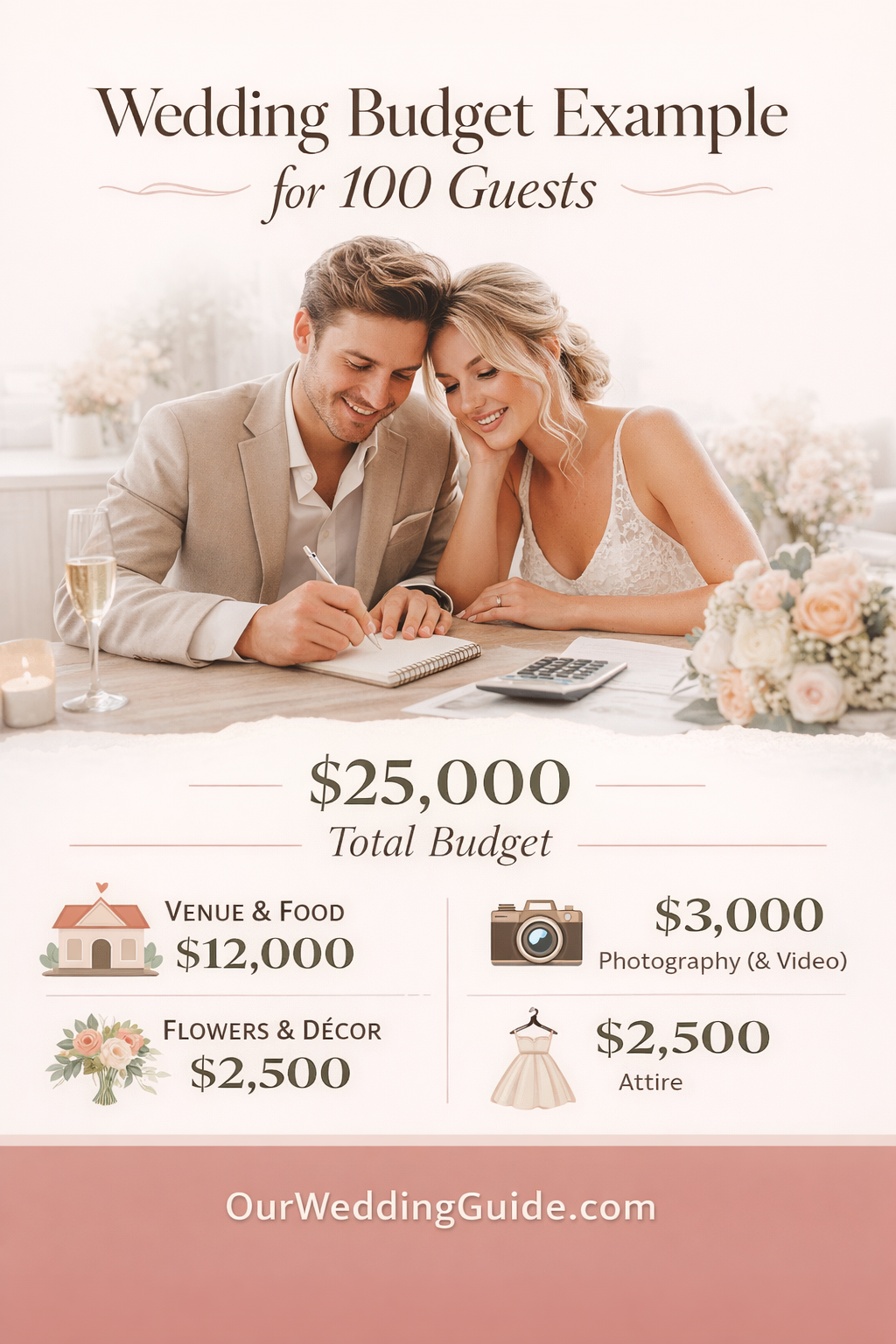
Real Example Wedding Budget for 100 Guests
Seeing a realistic example can make it much easier to understand how a wedding budget works in practice. The exact numbers will vary depending on location, venue, and personal choices, but the example below illustrates how a typical wedding budget might be allocated for a celebration with about 100 guests.
In this example, the couple has decided on a total wedding budget of $30,000. They want a beautiful celebration but also want to avoid unnecessary spending so they can begin married life without financial stress.
Example Wedding Budget Allocation
|
Category Venue and catering Total |
Estimated Cost $12,000 |
In this example, the largest portion of the wedding budget goes toward venue and catering, which is typical for most weddings. Because those costs are closely tied to guest count, even small adjustments to the number of guests can significantly affect the overall budget.
This kind of example can help you begin thinking about how to plan a wedding budget that fits your priorities. Some couples may decide to spend more on photography or entertainment, while others may prefer to invest more in the venue or the guest experience. The goal is not to follow a rigid formula but to create a wedding budget that reflects what matters most to you as a couple.
Wedding Budget Calculator Example
As you begin planning your wedding budget, it can be helpful to use a simple calculation to estimate your overall spending. Guest count influences many wedding costs, so starting with a per-person estimate can give you a quick sense of the total budget you may need.
For example, suppose you estimate that your wedding will cost about $250 per guest, and you are planning to invite 100 guests. A simple calculation provides a rough estimate of the total wedding budget.
Estimated cost per guest × number of guests:
250 × 100
Estimated wedding budget = $25,000
This quick calculation does not replace a detailed wedding budget, but it provides a helpful starting point. Once you have an overall estimate, you can divide that total into categories such as venue, catering, photography, attire, flowers, and entertainment.
Many couples find that beginning with a simple wedding budget calculation helps them approach planning more realistically. Instead of guessing at wedding costs, you can start with a framework that reflects both your guest count and the type of celebration you hope to create.
Hidden Wedding Costs Couples Forget to Include in Their Budget
When couples first begin planning a wedding budget, they usually focus on the most visible expenses—venue, catering, photography, and attire. However, many weddings also include smaller costs that are easy to overlook during the early stages of planning.
These expenses may seem minor individually, but together they can significantly affect your total wedding budget if they are not anticipated.
Examples may include:
- Tipping for deliveries
- Snacks for those who are working behind the scenes to set things up for your wedding ceremony and reception
- Gift cards if someone goes above and beyond your expectations to help
- Car washes for vehicles that will be used in your wedding
- Uber fees for picking up members of the wedding party or special guests
- Dry cleaning and alteration expenses for that suit that has been hanging in the closet for a couple of years
- Those small, inexpensive items that just make things more special.
It always amazes me that a trip to the dollar store can cost me over $50.
Being aware of these hidden wedding costs can help you plan more confidently and avoid surprises later in the planning process.
Service Charges and Gratuities
Many venues and catering companies add service charges that can range from 18% to 25% of the total bill. These fees are sometimes separate from gratuities for staff, bartenders, or coordinators. When reviewing vendor contracts, it is helpful to ask for a complete estimate that includes all service fees and expected tips.

Alterations and Attire Accessories
Wedding attire often costs more than the initial price of the dress or suit. Alterations, steaming, shoes, jewelry, veils, cufflinks, and other accessories can quickly add several hundred dollars to your wedding budget.
Postage and Invitation Extras
Stationery costs do not end with the invitations themselves. Couples often forget to budget for postage, RSVP cards, envelope liners, wax seals, or additional inserts such as directions and accommodation details.
Vendor Meals
If your photographer, videographer, band, or wedding coordinator will be present during the reception, many contracts require that you provide meals for them. These vendor meals are typically charged at the same per-person catering rate as guest meals.
Transportation and Parking
Transportation for the wedding party, shuttle service for guests, or parking fees at certain venues can add unexpected expenses to the day. Even smaller costs like fuel, rental time extensions, or additional drivers can affect the overall wedding budget.
Marriage License and Legal Fees
Although relatively small compared with other wedding costs, the marriage license fee and any related administrative costs should still be included in your budget.
Other Hidden or Forgotten Expenses
- Tipping for deliveries
- Snacks for those who are working behind the scenes to set things up for your wedding ceremony and reception
- Gift cards if someone goes above and beyond your expectations to help
- Car washes for vehicles that will be used in your wedding
- Dry cleaning and alteration expenses for that suit that has been hanging in the closet for a couple of years
- Those small, inexpensive items that just make things more special.
It always amazes me that a trip to the dollar store can cost me over $50.
Contingency Expenses
Many experienced wedding planners recommend reserving 5–10% of your total wedding budget for unexpected expenses. Last-minute décor items, weather-related adjustments, or timeline changes can all create additional costs.
Recognizing these hidden wedding costs early can help you plan a wedding budget that is realistic and flexible. When you allow room for the unexpected, the planning process becomes less stressful and the focus can remain on celebrating the beginning of your marriage.
How Guest Count Affects Your Wedding Budget
One of the most important factors influencing your wedding budget is the number of guests you invite. Many wedding expenses are calculated on a per-person basis, which means that even small changes to your guest list can have a significant impact on your total wedding cost.
Venue capacity, catering, bar service, rentals, invitations, and even certain décor elements are often tied directly to the guest count. When you add ten additional guests, you are rarely adding just ten meals. You may also be increasing table rentals, centerpieces, linens, place settings, invitations, and sometimes even the size of the venue required to host the event.
For this reason, guest count is often the single most powerful lever couples have when trying to plan a wedding budget that remains manageable. A wedding with 150 guests can easily cost tens of thousands of dollars more than a similar celebration with 80 guests simply because the per-person expenses multiply across multiple categories.
As you begin planning your wedding budget, it can be helpful to start with an estimated guest list before committing to major vendors.
When you understand how many people you hope to invite, you can evaluate venues, catering options, and overall wedding costs with greater clarity. This approach allows you to align your celebration with both your priorities and your financial comfort.
As you begin planning your wedding budget, it is helpful to start with an estimated guest list before committing to major vendors. When you understand how many people you hope to invite, you can evaluate venues, catering options, and overall wedding costs with greater clarity. This approach allows you to align your celebration with both your priorities and your financial comfort.
Ultimately, deciding how many people to invite is not simply a logistical decision. It is also a reflection of the type of wedding experience you want to create—whether that is an intimate gathering of close family and friends or a larger celebration that brings together a wider circle of loved ones.
How to Reduce Wedding Costs Without Sacrificing What Matters
For many couples, planning a wedding budget involves finding thoughtful ways to manage wedding costs while still creating a meaningful and memorable celebration. Reducing expenses does not necessarily mean compromising the quality or spirit of the day. Often it simply means making intentional choices about where your resources will have the greatest impact.
One of the most effective ways to reduce wedding costs is to focus your budget on the elements that matter most to you as a couple. Some couples prioritize photography so they can preserve lasting memories of the day, while others place greater importance on the guest experience, the venue atmosphere, or exceptional food. When you clearly identify your priorities, it becomes easier to scale back spending in areas that are less meaningful.
Timing can also have a significant influence on wedding costs. Many venues offer lower rates for off-season dates, weekday weddings, or Sunday celebrations. Choosing a time outside of peak wedding season can sometimes reduce venue and vendor costs without changing the overall experience of the day.
Simplifying certain elements of the celebration can also help couples plan a wedding budget more comfortably. A smaller guest list, streamlined décor, digital invitations, or a shorter reception timeline can all reduce costs while still preserving the spirit of the celebration.
Perhaps most importantly, thoughtful planning allows you to keep the focus on what the wedding truly represents. When you approach budgeting with clarity about your values and priorities, you are more likely to create a celebration that feels authentic, meaningful, and financially responsible.
Wedding Budget Mistakes Couples Often Make
Even when couples begin planning with the best intentions, wedding budgets can drift off course. The excitement of planning, combined with the many choices involved, can make it easy for expenses to grow beyond what was originally expected. Understanding the most common wedding budget mistakes can help you plan more thoughtfully and keep your spending aligned with your priorities.
Underestimating Guest Count Costs
Guest count has a larger impact on wedding costs than many couples initially realize. While it may seem that adding a few additional guests will not significantly affect the budget, most major wedding expenses are calculated on a per-person basis. Catering, bar service, rentals, invitations, favors, and sometimes even the size of the venue all increase as the guest list grows.
Because of this, a small increase in guest count can affect multiple budget categories at the same time. Being realistic about how many people you plan to invite—and setting clear guidelines for your guest list—can help you maintain better control over your wedding budget.
Ignoring Hidden Wedding Expenses
Many couples plan carefully for major costs such as the venue, catering, and photography, but overlook smaller expenses that accumulate over time. Service charges, gratuities, alterations, vendor meals, postage, transportation, and last-minute décor items can all add unexpected costs to the wedding budget.
While these expenses may seem minor individually, together they can represent a meaningful portion of the total budget. Being aware of these hidden wedding costs early in the planning process allows you to include them in your financial plan and avoid surprises later.
Spending Too Much on Low-Priority Details
One of the easiest ways for a wedding budget to grow unexpectedly is through spending on details that may not truly reflect your priorities as a couple. With so many beautiful ideas and trends available, it is easy to feel pressure to include additional décor, elaborate favors, or upgrades that were not part of the original plan.
Taking time early in the planning process to discuss what matters most to both of you can help prevent this. When your wedding budget reflects your shared priorities, it becomes easier to invest in the elements that will create the most meaningful experience while scaling back on details that are less important.
Not Leaving Room for Unexpected Costs
Even with careful planning, weddings often include expenses that couples do not anticipate at the beginning. Last-minute adjustments, extended vendor hours, weather-related changes, or additional décor can all create costs that were not part of the original estimate.
For this reason, many experienced planners recommend reserving 5 to 10 percent of the total wedding budget as a contingency fund. This flexible portion of the budget allows you to respond calmly to unexpected expenses and keeps the planning process from becoming unnecessarily stressful.
Recognizing these common wedding budget mistakes can help you approach planning with greater clarity and confidence. When you remain mindful of these potential challenges, your wedding budget becomes not only more realistic but also more supportive of the kind of celebration you hope to create.
Best Tools and Templates for Wedding Budget Planning
Creating a thoughtful wedding budget becomes much easier when you have the right tools to organize information, track expenses, and keep decisions in one place. While some couples prefer simple spreadsheets and others prefer physical planners or books, the goal is the same: to maintain clarity as your plans develop and your wedding costs begin to take shape.
Using a reliable system to track your wedding budget allows you to see how each decision affects the larger plan. When you can clearly monitor deposits, remaining balances, and category totals, you are much less likely to lose track of expenses or feel overwhelmed by the many details involved in wedding planning.
Wedding Planning Binders
Many couples find it helpful to keep their plans organized in a dedicated wedding planning binder. A good binder provides structured sections for vendor information, guest lists, contracts, timelines, and budget worksheets, allowing you to keep important details in one place.
One popular option is The Knot Ultimate Wedding Planner and Organizer. This planner includes checklists, budgeting pages, and planning timelines designed to guide couples through each stage of wedding planning.
Having a single place to store notes, contracts, and budgeting details can simplify communication between partners and make it easier to stay organized as the wedding approaches.
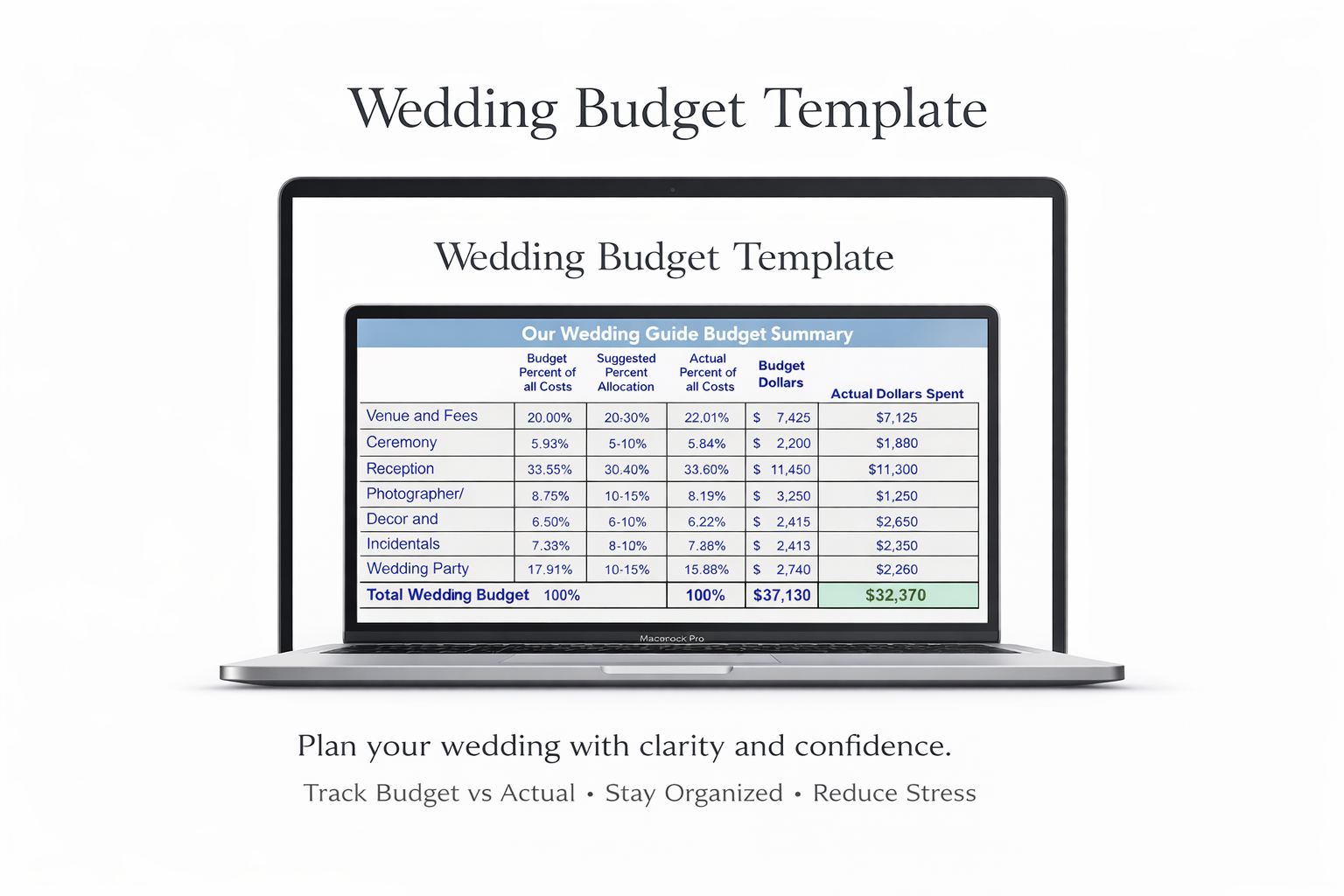
Budget Spreadsheets or Templates
Some couples prefer a digital approach to wedding budgeting. Budget spreadsheets and templates allow you to track expenses, update totals automatically, and adjust categories as plans evolve.
A simple spreadsheet can include columns for estimated costs, actual costs, deposits paid, and remaining balances. This format helps you monitor your wedding budget in real time and quickly see where adjustments may be needed.
Many couples also appreciate the flexibility of digital tools, since spreadsheets can be shared and updated by both partners throughout the planning process.
Wedding Planning Books
For couples who want both practical guidance and thoughtful perspective, wedding planning books can be an especially valuable resource. A well-written planning book not only provides checklists and budgeting advice, but also encourages conversations about priorities, expectations, and the meaning behind the celebration itself.
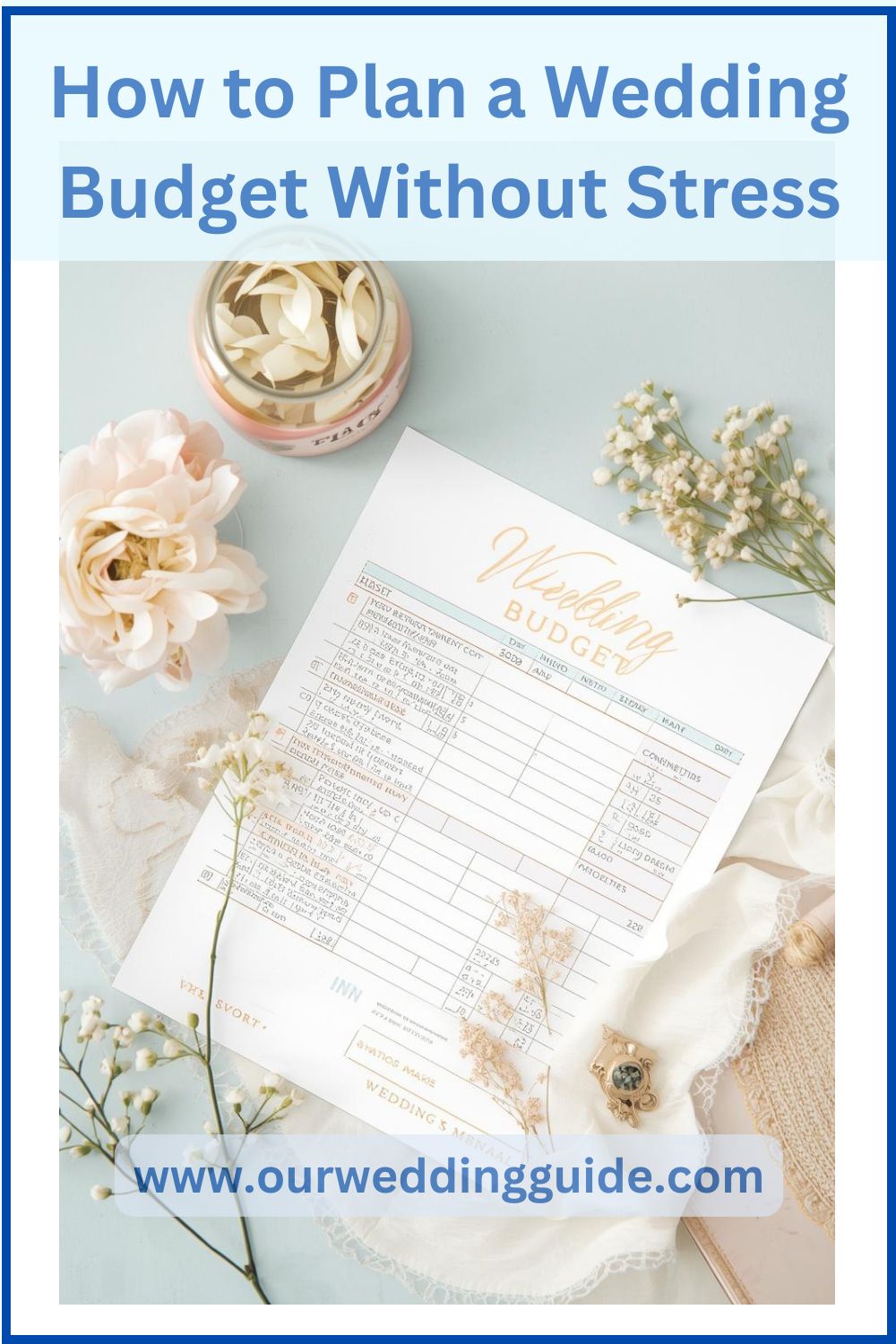
Books such as Planning Your Wedding, Building Your Marriage invite couples to think more deeply about the choices they make during the planning process. When budgeting is connected to values and shared decision-making, the experience of planning a wedding can become more meaningful and less stressful.
The right tools will not make every decision easier, but they can provide the structure that allows you to plan a wedding budget with clarity and confidence. When your planning system helps you stay organized and focused, you are free to devote more attention to the experience you are creating together.
Related Wedding Budget Guides
If you are beginning the process of planning a wedding budget, these additional guides may also be helpful. Just click on the links below:
- What does a Wedding Cost?
- Self Care Inspiration
- Countdown to Your Spring Wedding: Prepare Today
- A Complete Set of Tools to Help You Plan Your Wedding
Frequently Asked Questions About Wedding Budgets
How much should a wedding budget be?
There is no single amount that every couple should spend on a wedding. A realistic wedding budget depends on your financial situation, your priorities as a couple, and the type of celebration you hope to create. Some couples host beautiful weddings for under $10,000, while others choose to spend significantly more. The most important goal when planning a wedding budget is to create a celebration you can afford comfortably without creating unnecessary financial stress as you begin married life.
What is the biggest wedding expense?
For most weddings, venue and catering represent the largest portion of the budget. These expenses are usually tied to guest count and often account for 40 to 50 percent of total wedding costs. Because of this, the number of guests you invite is one of the most important factors influencing your overall wedding budget.
How do couples split wedding costs?
Traditionally, certain wedding expenses were divided between the families of the couple, but modern weddings often take a more flexible approach. Many couples pay for most of the celebration themselves, while others receive financial contributions from one or both families. The most important step is to discuss expectations clearly at the beginning of the planning process so that everyone understands what they are comfortable contributing.
How far in advance should you start planning a wedding budget?
Ideally, you should begin planning your wedding budget as soon as you become engaged, before booking venues or vendors. Establishing a clear budget early helps guide important decisions about guest count, venue options, and overall wedding style. When couples wait too long to define their budget, it becomes much easier for expenses to grow beyond what they originally intended.
What percentage of the wedding budget should be reserved for unexpected costs?
Many wedding planners recommend reserving 5 to 10 percent of your total wedding budget for unexpected expenses. This contingency fund can help cover hidden costs such as alterations, gratuities, delivery fees, overtime charges, or last-minute adjustments. Setting aside this cushion allows you to handle surprises calmly without disrupting the rest of your budget.
Conclusion
Learning how to plan a wedding budget is about much more than organizing numbers on a spreadsheet. It is an opportunity to think carefully about the kind of celebration you want to create and the values that will guide your decisions as a couple. When you approach wedding planning with clarity about what matters most, your budget becomes a tool that helps you shape a meaningful experience rather than a source of stress.
Every wedding budget reflects a series of choices. Some couples choose to invest more in the atmosphere of the venue, others in photography that preserves lasting memories, and others in the experience they create for their guests. There is no single formula for the “right” wedding budget. The most successful plans are those that align spending with your priorities while remaining financially responsible for the life you are beginning together.
Ultimately, planning a wedding is not only about preparing for a single day. It is also one of the first opportunities you have to practice shared decision-making, communication, and thoughtful planning as partners. When you learn how to plan a wedding budget together, you are doing more than organizing an event—you are beginning the process of building a marriage with intention, trust, and care.
If you would like deeper guidance on the conversations that help couples plan their wedding while strengthening their relationship, you may also find helpful insights in Planning Your Wedding, Building Your Marriage, which explores how engaged couples can navigate planning decisions in ways that support both the celebration and the partnership that follows.