- Home
- Ceremony Script
- Processional
The Wedding Processional
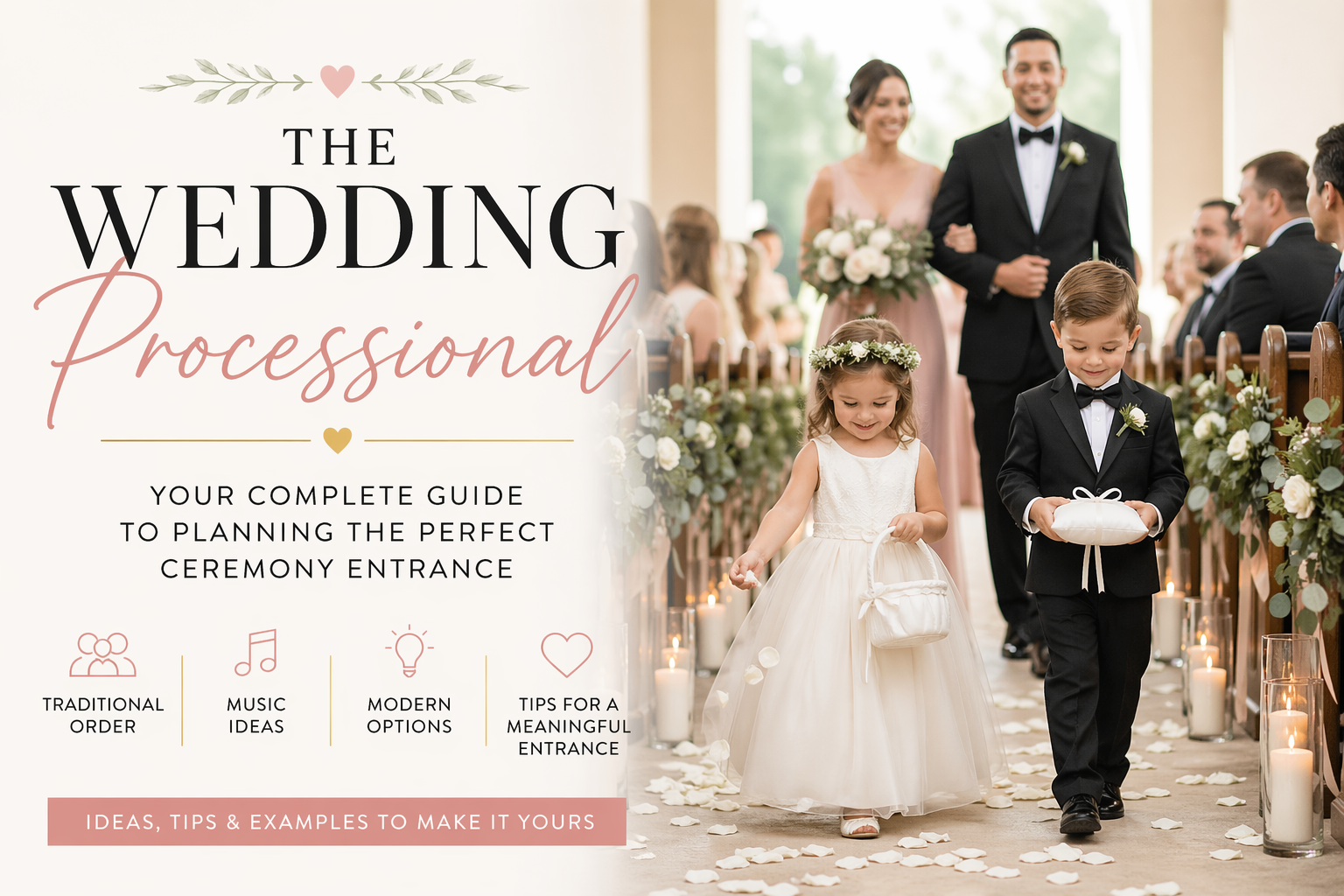
A joyful wedding processional sets the tone for your ceremony
What Is the Wedding Processional?
The wedding processional marks the official beginning of your ceremony. It is the moment when your wedding party is introduced, important family members are honored, and the tone for the entire ceremony is established.
As the music begins and each person walks down the aisle, the atmosphere shifts. What was once anticipation becomes presence. The gathering comes together with a shared sense of joy, expectation, and quiet well wishes for the couple.
This is one of the most meaningful moments of your wedding day. It is where the focus gently settles on you—not as individuals, but as a couple preparing to enter into marriage. Few moments in life carry this kind of attention, significance, and emotional weight.
The processional is more than an entrance. It is the opening movement of your ceremony—one that sets the pace, the tone, and the sense of meaning for everything that follows.
To see how the processional fits into the full ceremony, explore our complete wedding ceremony script guide (step-by-step structure and wording.)
Choosing Your Processional Style
There are many traditions, recommendations, and creative approaches to the wedding processional. While classic formats are widely recognized, there is no single “right way” to structure this moment.
Traditionally, the groom is already at the front as the bride makes her entrance, and the couple exits together at the end of the ceremony. This approach carries a sense of anticipation and symbolism that many couples value.
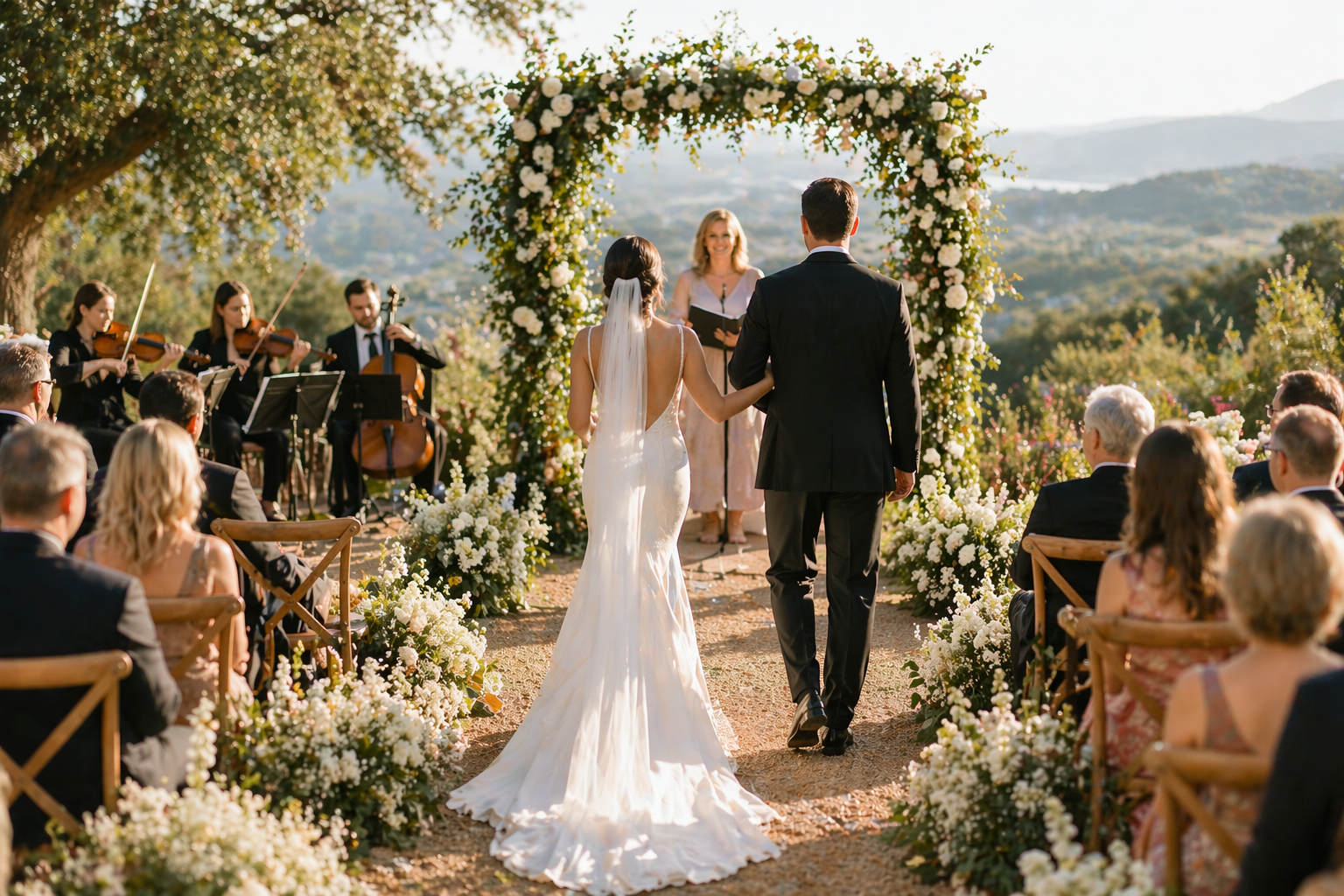
A personalized processional can reflect your setting, style, and the experience you want to create.
However, today’s ceremonies often reflect a more personalized approach. Couples are choosing to design a processional that aligns with their relationship, their values, and the experience they want to create.
You might consider:
- adjusting the order of entrance
- including both partners’ families in meaningful ways
- walking in together as a couple
- creating a distinct entrance for the groom
- incorporating cultural or personal traditions
There is also a deeper layer to consider. The processional is not only about who enters and when—it is about how the moment feels.
Watching your partner walk toward you is one of the most memorable experiences of the ceremony. For some, preserving that moment is essential. For others, expressing a sense of equality and shared presence may feel more meaningful.
There is no single approach that fits every couple. What matters most is that your processional reflects your story and sets the tone for the ceremony you are about to share.
For a complete breakdown of how each part fits together, see the full wedding ceremony structure and script guide here.
Wedding Processional Order (Step-by-Step)
While your processional can be personalized in many ways, most ceremonies follow a general structure.
Understanding this order provides a helpful foundation—whether you choose to follow tradition or adapt it to reflect your own style.
Who Walks First in a Wedding Processional?
In a traditional wedding processional order, the entrance typically begins with grandparents (if included), followed by parents, the officiant, and the groom. The wedding party enters next, with the bride traditionally walking last.
This wedding processional order creates a natural progression and a sense of anticipation, guiding each entrance toward the moment when the couple comes together at the front of the ceremony.
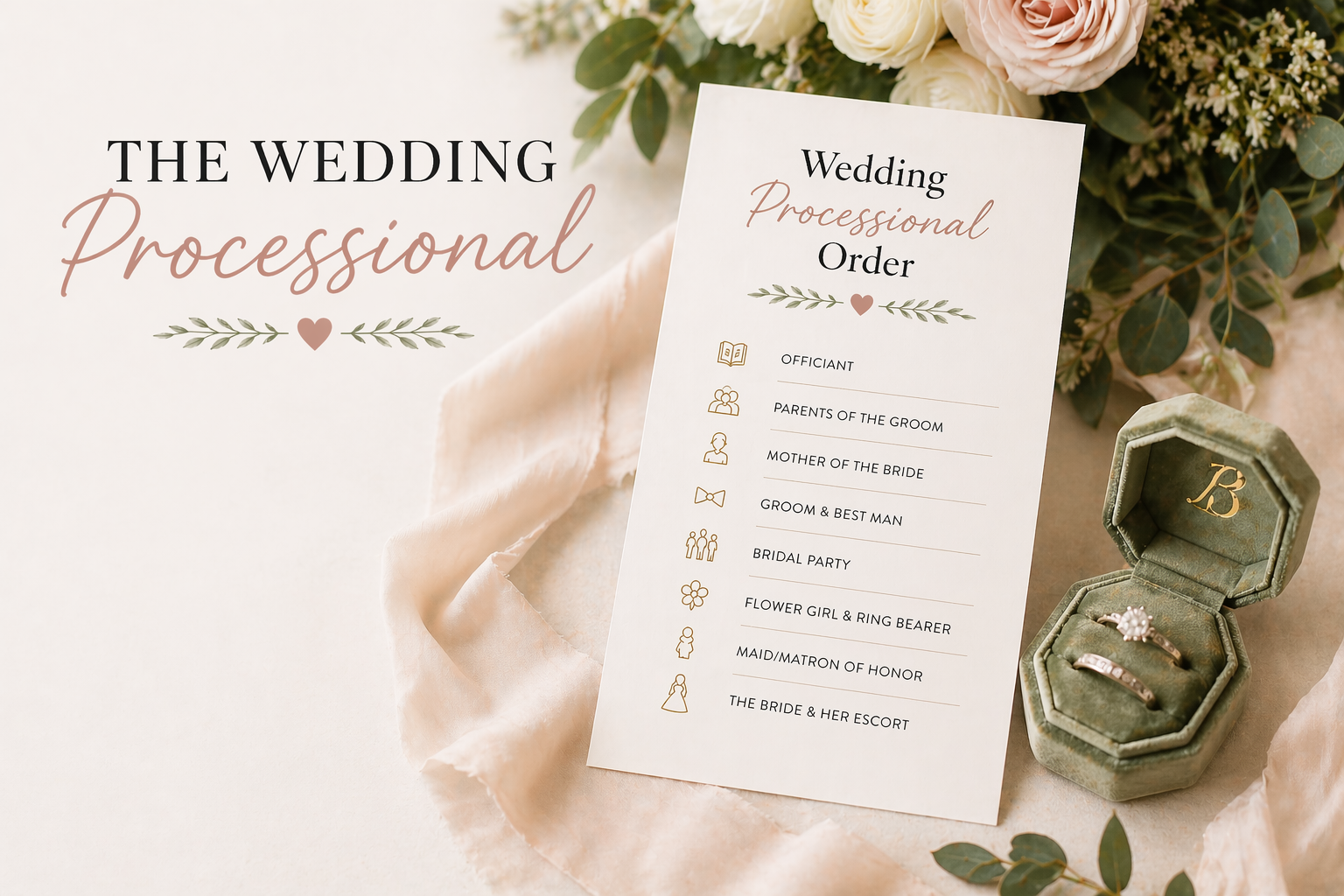
Standard Wedding Processional Order
A traditional wedding processional follows a sequence that has been used for generations. While the exact order can vary depending on religious, cultural, or personal preferences, the following structure is commonly used as a foundation:
- Grandparents (optional)
- Parents of the groom
- Mother of the bride
- Officiant
- Groom (often entering from the side or already at the front)
- Best man
- Groomsmen / groomswomen
- Bridesmaids
- Maid or matron of honor
- Flower girls and ring bearers
- The bride, escorted by one or both parents, or entering on her own
This traditional order creates a sense of anticipation, building toward the entrance of the bride and the beginning of the ceremony itself.
Traditional vs Modern Wedding Processional Order
While a traditional wedding processional order is widely recognized, many couples choose to adapt the structure to reflect a more modern or personalized approach.
A traditional wedding processional order follows a structured sequence, with the groom typically waiting at the front while the bride enters last. This format creates a natural build of anticipation and emphasizes the significance of the bride’s entrance.
A modern wedding processional order offers greater flexibility. Couples may choose to walk in together, give both partners a distinct entrance, or adjust the order to reflect family dynamics, cultural traditions, and personal values.
In simple terms:
- Traditional: structured order, groom waits at the front, bride enters last
- Modern: flexible order, shared or separate entrances, personalized roles
There is no single “correct” wedding processional order. The best choice is the one that feels meaningful to you—whether that means honoring tradition or creating a ceremony that reflects your relationship in a more personal way.
Considering Meaning Within Tradition
While tradition provides a helpful structure, it is important to reflect on what feels appropriate for you, your partner, and your guests.
Some couples choose highly energetic or contemporary music for their entrance, while others prefer a more traditional and reflective tone. The processional does not need to feel formal or rigid, but it does carry a different atmosphere than the reception or celebration that follows. It is the opening moment of the ceremony, and it sets the tone for everything that comes next.
Creating a Meaningful Entrance for Both Partners
Traditionally, the groom waits at the front while the bride makes her entrance. This can be a powerful and symbolic moment, filled with anticipation and emotion.
At the same time, some couples choose to create a more balanced experience by giving the groom a distinct entrance as well. This might include:
- walking down the aisle with his parents
- having a clearly defined moment of arrival
- being included more visibly at the beginning of the processional
These choices can reflect a sense of shared significance while still honoring the meaning of the moment.
Balancing Tradition and Personal Preference
In some cases, your processional choices may intersect with other traditions—such as whether or not you see each other before the ceremony.
As you consider your options, think about:
- which traditions are most meaningful to you
- which elements you may want to adapt
- how your decisions will shape the emotional experience of the ceremony
There is great value in preserving the moment of seeing your partner walk toward you. At the same time, there is room for creativity and personal expression.
Ultimately, your processional should be dignified, memorable, and reflective of your relationship—a moment that centers the spotlight on the couple and sets the stage for everything that follows.
Let There be Music
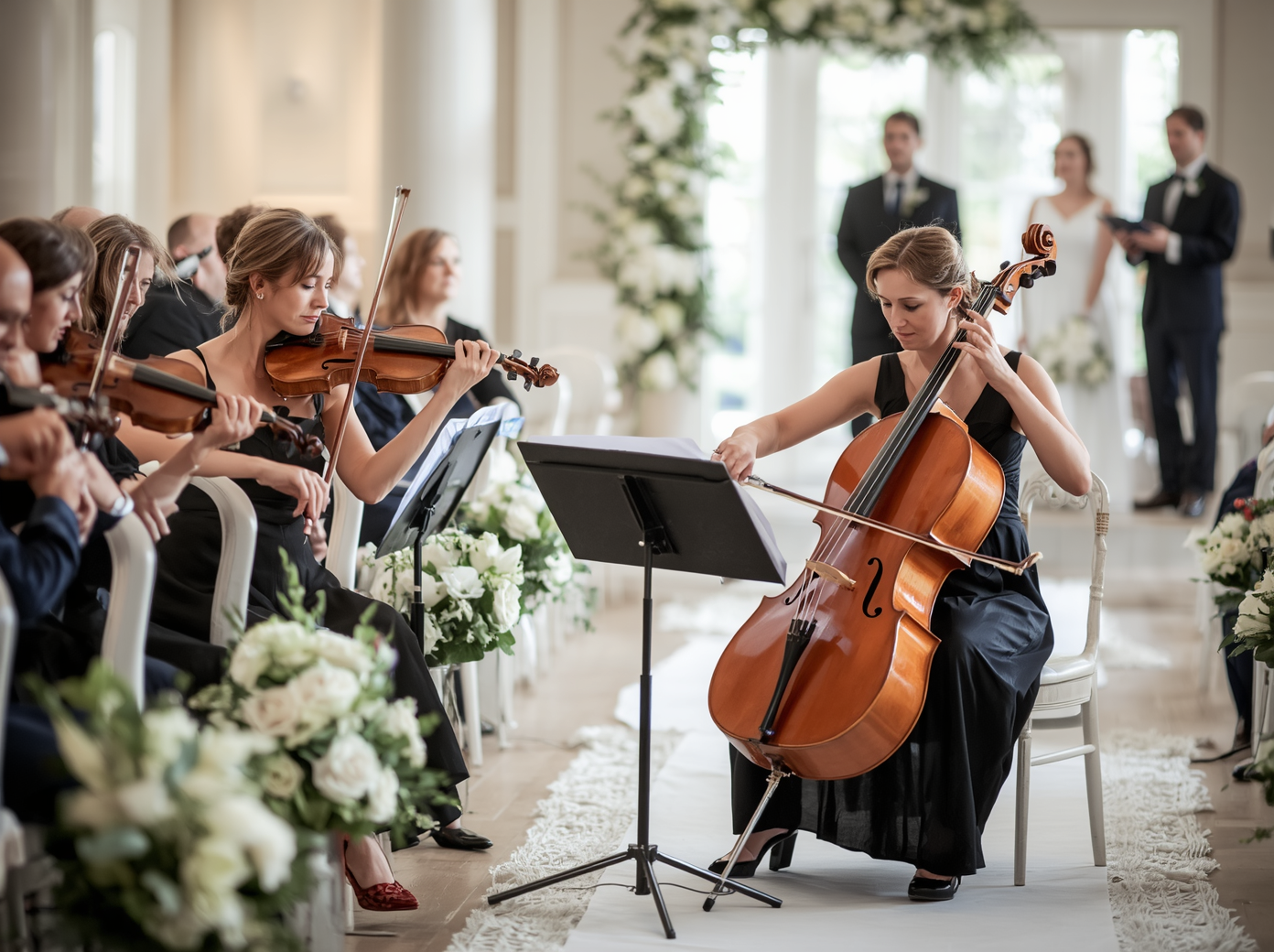
Music plays a central role in shaping the atmosphere of your wedding processional. It is often the first emotional signal your guests experience as the ceremony begins, setting the tone for everything that follows.
While many couples choose traditional selections, others prefer music that reflects their personality and relationship. There is no single right choice—but there should always be clear intention behind it.
Timing and Transitions
One of the most important considerations is how your music will flow throughout the processional.
- Will the same piece of music play from beginning to end?
- Will there be a transition before the bride or couple enters?
- Will the tempo match the pace of each person walking down the aisle?
Some couples choose to shift the music just before the final entrance, creating a subtle but powerful moment of anticipation.
Clear communication with your musicians or DJ is essential. Small details—such as timing, volume, and tempo—can significantly impact how the moment feels.
Communicating Your Music Choices
One of the most common challenges with processional music is miscommunication.
At one wedding rehearsal, it became apparent that the musician had selected her own piece for the processional—without confirming it with the couple. The bride was understandably surprised when it was not the music she had envisioned.
The lesson is simple:
Be sure there is clear communication about your music selections well in advance of the ceremony.
Understanding Musical Interpretation
Even when the correct piece of music is selected, the way it is performed can vary significantly.
Some musicians may interpret the moment with a soft and gentle tone, creating a romantic atmosphere. Others may approach it with a more celebratory or dramatic style.
Either approach can be effective—but it’s important to ensure that the style of performance aligns with the feeling you want to create.
If possible, take time before the rehearsal to:
- hear how your musician or DJ will present the music
- discuss timing and transitions
- confirm how the music will support each entrance
Things to Consider
As you plan your wedding processional, there are several practical and meaningful considerations that can help you create a moment that feels both personal and well-organized.
Ceremony Style and Setting
The type of ceremony you are planning will naturally influence your processional.
- Will your ceremony follow a religious or cultural tradition?
- Is your setting formal, casual, indoor, or outdoors?
- Is your gathering large and structured, or small and intimate?
In some settings, a traditional processional may feel appropriate and expected. In others—such as a very small or informal ceremony—it may feel unnecessary or out of place.
Who Will Be Included
Think carefully about who you would like to include in your processional.
- Will grandparents be recognized?
- Will children or close family members participate?
- Are there meaningful relationships you want to highlight?
Including loved ones can add warmth and connection, but it may also introduce elements of unpredictability—especially with young children or pets. Planning with flexibility in mind can help you navigate these moments gracefully.
Individual or Shared Entrance
There are many ways to approach the entrance itself.
- One partner may walk in while the other waits
- Each partner may enter separately
- You may choose to walk in together
Each option carries its own meaning. Some emphasize anticipation and tradition, while others reflect partnership and shared experience.
Tradition and Personal Meaning
Certain traditions—such as not seeing each other before the ceremony—may influence how you design your processional.
Consider:
- which traditions are meaningful to you
- which ones you may want to adapt
- how your choices will reflect your relationship
There is no single approach that is right for everyone. The goal is to create a processional that feels authentic and intentional.
Final Thought
As you consider each of these elements, remember that your processional is more than a sequence—it is an experience. When thoughtfully planned, it becomes a meaningful introduction to your ceremony and a moment you will remember for years to come.
Once your processional is planned, the next step is understanding how it connects to the full ceremony.
See the complete wedding ceremony script and structure guide to plan every step from start to finish.