The first words
Wedding Invitation Wording: Examples for Every Kind of Wedding
Your invitation is the first thing your guests will hold in their hands about your wedding. Before they see the flowers or hear a word of the ceremony, they read a few lines on a card. Those lines tell them who is inviting them, what kind of day it will be, and how much it matters to you.
Good wording doesn't need to be fancy. It needs to be clear, warm, and sound like the two of you. Below you'll find wording you can use as it is or change to fit. Put in your own names where you see (Name).
The quick version
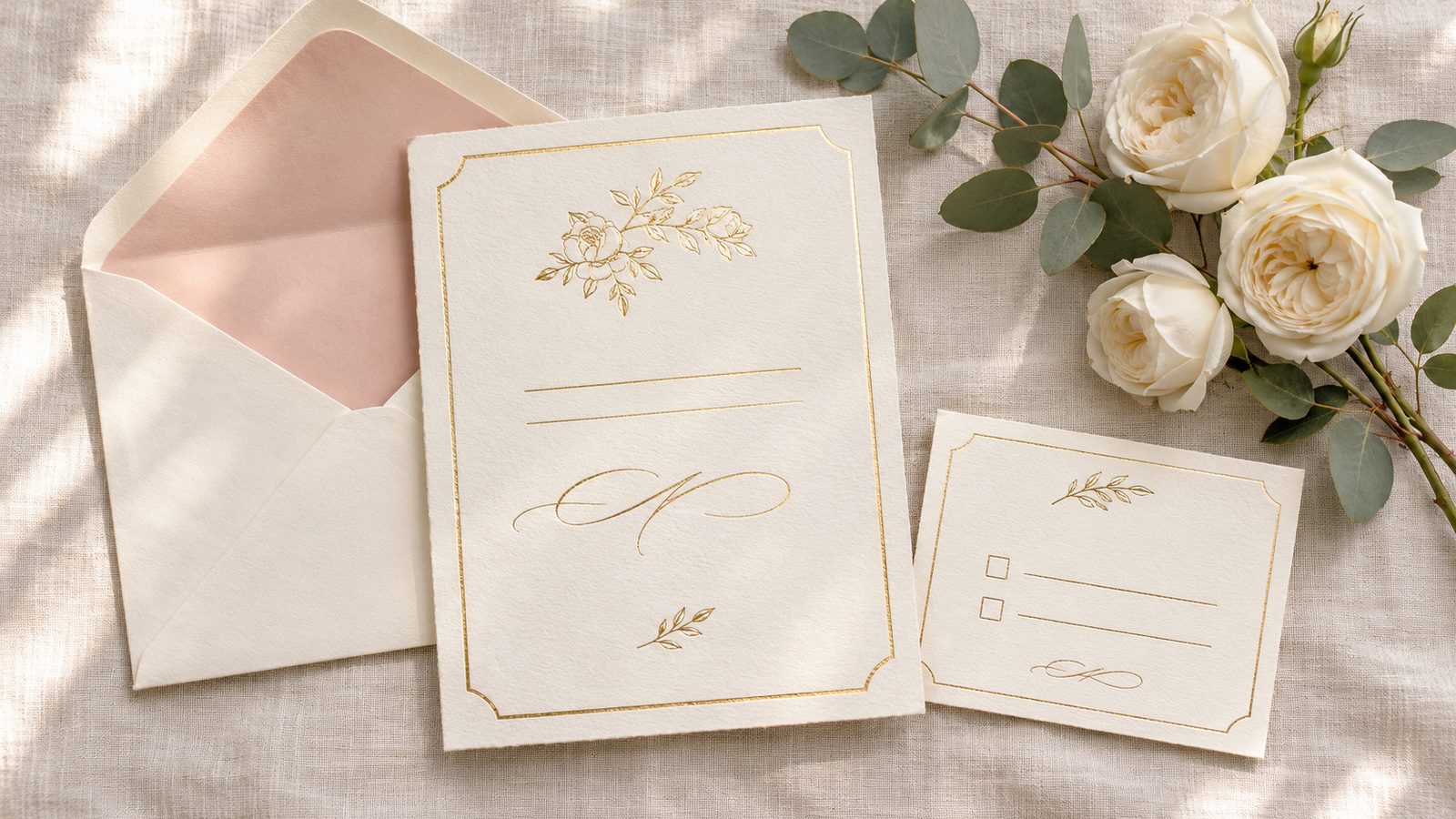
- The first line says who is hosting: the two of you, your parents, or both families together.
- Then come your names, the date, the time, the place, and a line about the reception.
- Formal invitations spell out the date and time in words. Simple and casual ones can use numbers.
- Leave registry details off. Put them on your wedding website.
- Read it out loud, have two other people proof it, and look at a printed sample before you order them all.
In this guide
Who is doing the inviting?
The very first line of a traditional invitation names the hosts. Years ago that was almost always the bride's parents, because they paid. Today most couples host their own wedding, or share it with both families. Let the first line tell the truth about who is welcoming your guests.
- The two of you are hosting: start with your own names, or with “Together with their families.”
- One set of parents is hosting: start with their names, then “request the pleasure of your company at the marriage of their daughter” or “son.”
- Both families are hosting: name both sets of parents, then the two of you.
If the question of who pays is a touchy one in your family, “Together with their families” is a gracious way to include everyone without keeping score.
Formal wording
Formal invitations use full names, spell out the date and time, and keep to a traditional order. They suit an evening wedding, a church wedding, or anything with a dress code.
request the honour of your presence
at the marriage of their daughter
(Name)
to
(Name)
Saturday, the twelfth of June
two thousand twenty-seven
at half past four o'clock
(Church or venue)
(City, State)
Reception to follow
and
(Parents' names)
request the pleasure of your company
at the marriage of their children
(Name) and (Name)
Saturday, the twelfth of June
two thousand twenty-seven
at five o'clock in the evening
(Venue), (City, State)
Dinner and dancing to follow
Simple and warm wording
This is the wording most couples use today. It's friendly without being casual, and it works for almost any wedding.
(Name) and (Name)
invite you to celebrate their marriage
Saturday, June 12, 2027
at 4:30 in the afternoon
(Venue)
(City, State)
Reception to follow
would love for you to join them
as they say “I do”
Saturday, June 12, 2027 · 4:30 p.m.
(Venue), (City, State)
Dinner, dancing and good company to follow
Casual wording
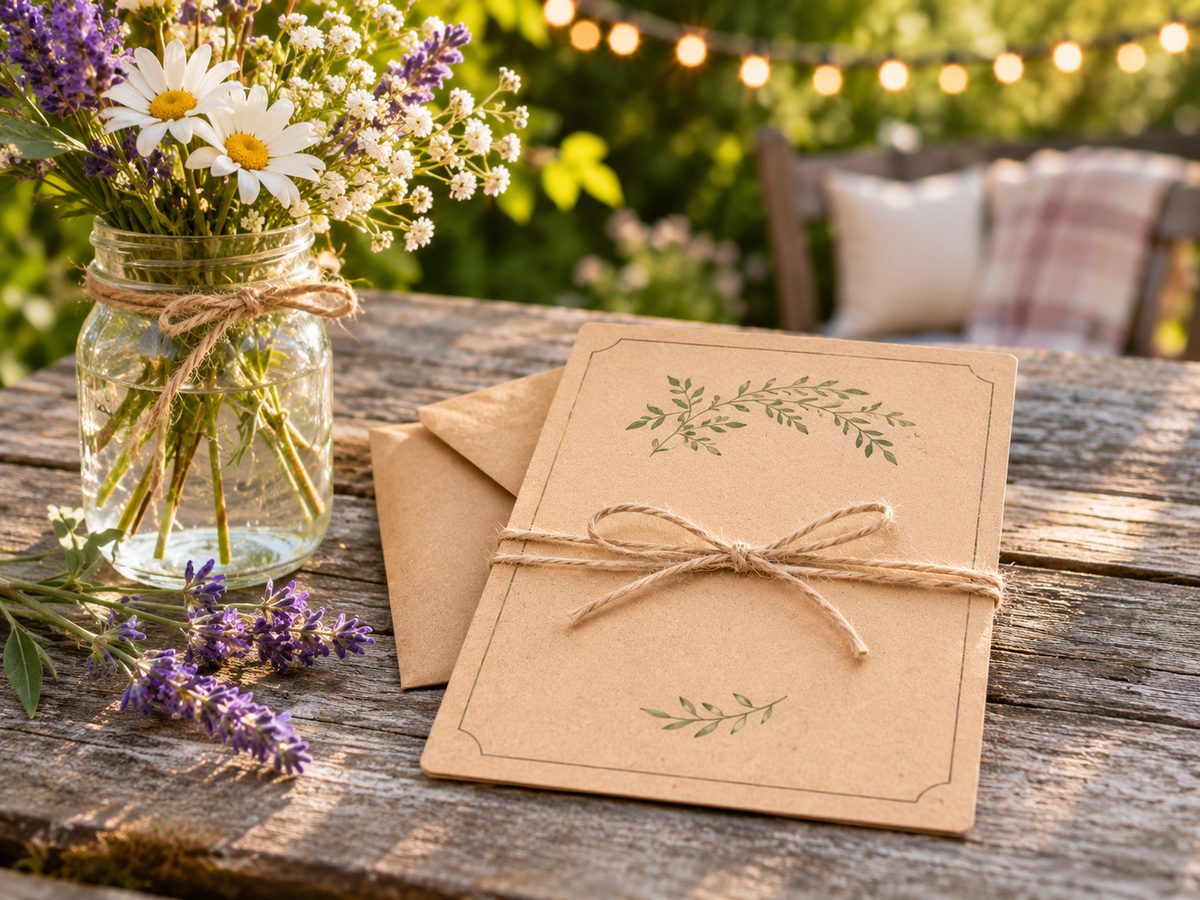
A backyard wedding, a barn, a beach, or a small gathering of family can carry lighter words. Just keep the facts clear. Even the most relaxed invitation still needs a date, a time, and a place people can find.
(Name) and (Name)
Come celebrate with us
Saturday, June 12, 2027 at 4:30
(Address)
Food, music and plenty of hugs to follow
are keeping it small and close,
and we want you there.
Saturday, June 12, 2027 at 4:30
(Place)
Supper together afterward
Faith-centered wording
If your faith is at the heart of your marriage, the invitation is a natural place to say so. I'd keep it to a single line. It sets the tone without turning the card into a sermon.
(Name) and (Name)
invite you to witness
the beginning of their life together
Saturday, the twelfth of June
two thousand twenty-seven
at four o'clock in the afternoon
(Church), (City, State)
If you are planning a ceremony that's spiritual but not tied to one faith, or not religious at all, our page on religious, spiritual or neither ceremonies can help you settle the tone before you choose words.
Blended families
When parents have remarried, or the two of you have children, the invitation can quietly show that everyone belongs. Name the people who matter, and keep the lines in an order that feels fair. If including everyone makes the card crowded, “Together with their families” does the job.
(Child's name) and (Child's name),
(Name) and (Name)
invite you to celebrate
the joining of their family
Saturday, June 12, 2027 at 4:30 p.m.
(Venue), (City, State)
For ways to include children and stepfamily in the ceremony itself, see our blended family ceremony page.
Honoring a parent who has died
Many couples want a mother or father who has passed to be part of the invitation. There is a gentle, traditional way to do it. It's honest, it's brief, and it lets that parent's name be read by every guest.
and the late (Parent's name),
and (Name), son of (Parents' names),
invite you to celebrate their marriage
Saturday, June 12, 2027 at 4:30 p.m.
(Venue), (City, State)
Another choice is “(Name), daughter of (Parent's name) and the late (Parent's name).” Either way, the word “late” says it all, kindly. If you'd like to honor them during the ceremony too, our page on the keepsake table shows a simple way that works for a parent as well.
Small details that trip people up
- “Honour” or “pleasure”? Traditionally, “request the honour of your presence” is used for a ceremony in a house of worship, and “the pleasure of your company” for everywhere else.
- Pick one style and stick with it. If you spell out the date, spell out the time too.
- No “RSVP” on the invitation card. Replies go on a separate RSVP card or your wedding website.
- No registry details. Put them on your wedding website.
- Check the day of the week against the date. It's an easy mistake to make, and an expensive one to fix after printing.
- Give the full address. Your venue may be famous to you, but not to Aunt Carol's GPS.
Before you order
Here is the advice I give about almost everything in a wedding: start early, and check it before you commit. Read your invitation out loud. Hand it to two people who didn't write it. Then, if your printer offers it, order one printed sample with your real names and colors before you order the whole stack. Colors on a screen are not colors on paper, and it's far cheaper to find a mistake on one card than on one hundred fifty.
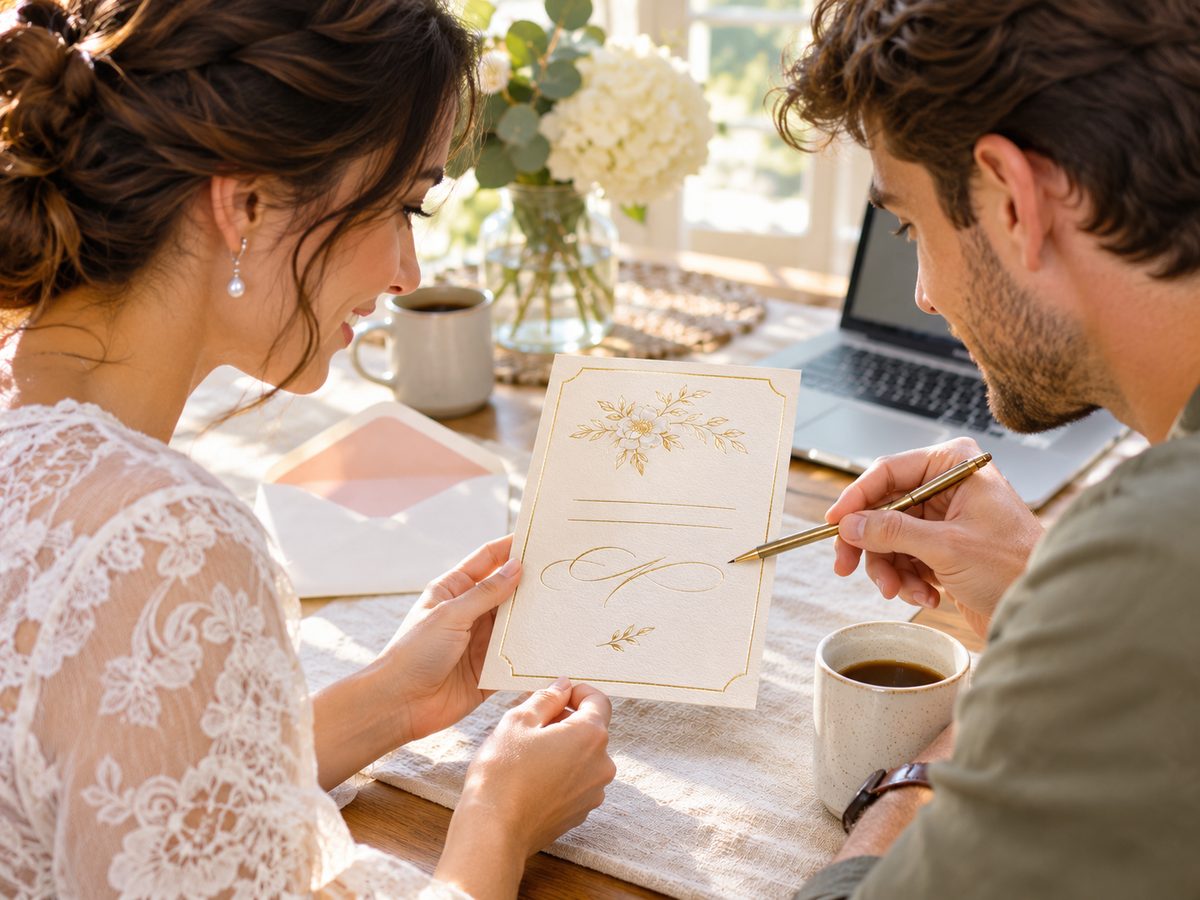
For the timeline, save-the-dates, RSVP cards and tracking replies, see our full guide on how to organize wedding invitations and track RSVPs.
Questions couples ask
Should it say “honour of your presence” or “pleasure of your company”?
The old rule is “honour of your presence” for a ceremony in a church or other house of worship, and “pleasure of your company” everywhere else, including the reception. Most guests won't notice either way, so use whichever sounds like you.
Do we have to write out the date and time in words?
On a formal invitation, yes: “Saturday, the twelfth of June” and “half past four o'clock.” On a simple or casual invitation, numbers are fine. Pick one style and use it all the way through.
Can we put our registry on the invitation?
I'd leave it off. Put registry details on your wedding website or a small enclosure card. The invitation is about inviting people, not about gifts.
How do we say it's adults only?
Address the envelope only to the people invited, and add a gentle line on the RSVP card. Our invitations and RSVPs guide has wording for that.
Still building your list? Start with how to create a wedding guest list and how to decide who to invite, then check your timing on the wedding planning checklist.